Laura Wolvaardt Shines Bright Ahead of T20 World Cup, But South Africa Seek Strong Support Cast
South Africa captain Laura Wolvaardt is in exceptional form ahead of the ICC Women’s T20 World Cup, but concerns remain over the team’s lack of consistent support performers.
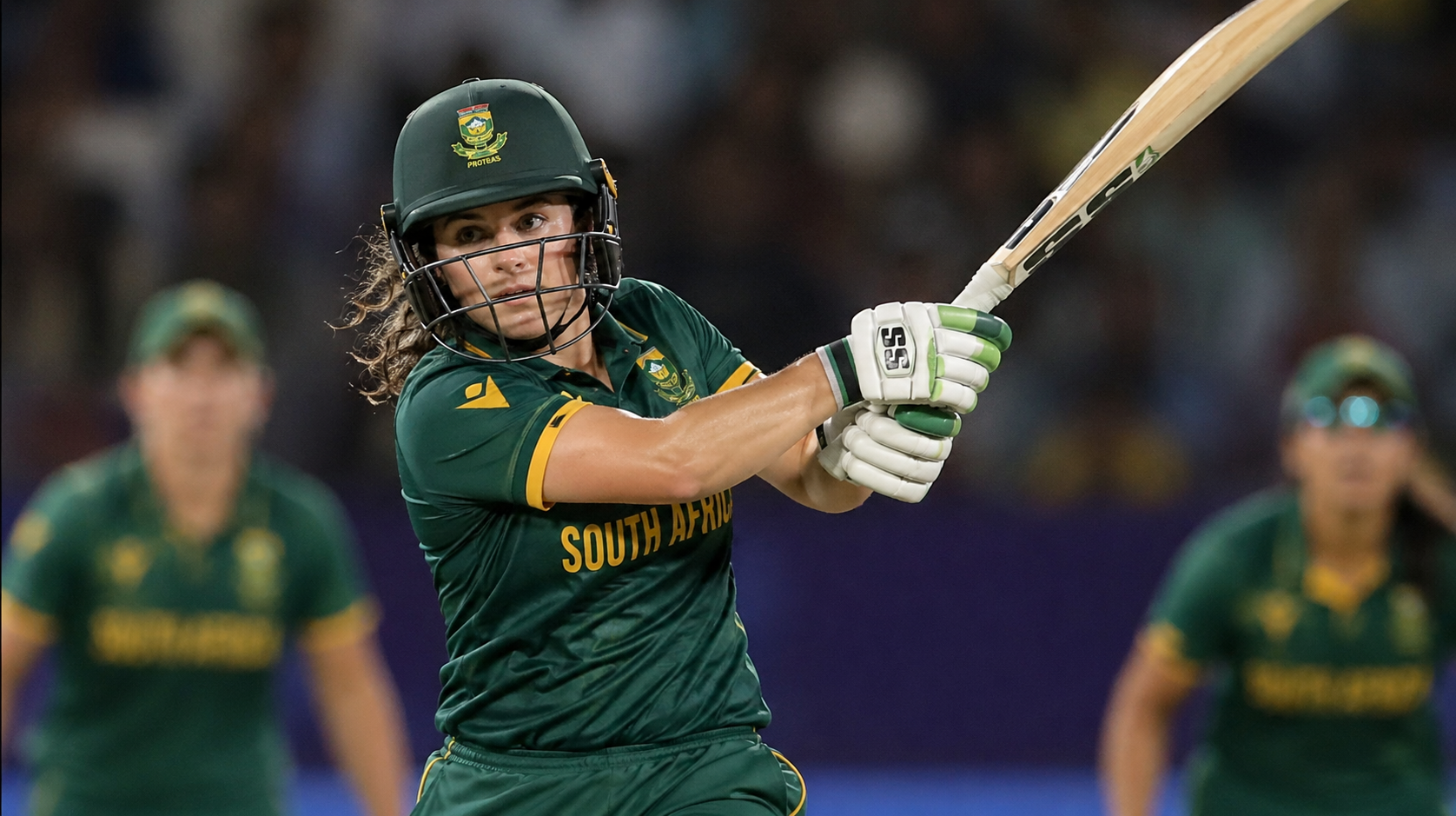
As the countdown to the ICC Women’s T20 World Cup intensifies, South Africa find themselves in a familiar yet challenging position — heavily reliant on the brilliance of their captain, Laura Wolvaardt. While Wolvaardt’s recent performances have been nothing short of extraordinary, the broader question looming over the team is whether the rest of the squad can rise to the occasion and provide the necessary support in a high-pressure global tournament.
Wolvaardt has emerged as one of the most consistent and technically sound batters in modern women’s cricket. Her calm demeanor at the crease, combined with an ability to anchor innings while maintaining a healthy strike rate, has made her the backbone of South Africa’s batting lineup. In recent series leading up to the World Cup, she has not only scored heavily but also demonstrated leadership qualities that have inspired confidence within the team.
However, cricket is a team sport, and no matter how exceptional an individual performer may be, success in tournaments like the T20 World Cup requires collective contributions. South Africa’s over-reliance on Wolvaardt has become increasingly evident, particularly in matches where the middle order has struggled to capitalize on strong starts or recover from early setbacks.
Wolvaardt’s Form: A Major Positive
There is no denying that Wolvaardt’s form is one of the biggest positives for South Africa heading into the tournament. Over the past year, she has consistently delivered match-winning performances across formats, establishing herself as one of the leading batters in international cricket.
Her ability to adapt to different match situations — whether it is building an innings from scratch or accelerating in the death overs — makes her an invaluable asset. More importantly, her performances have often come against strong opposition, highlighting her capability to perform on the biggest stages.
In recent matches, Wolvaardt has showcased remarkable composure under pressure. Whether chasing challenging totals or setting competitive targets, she has been at the forefront, often carrying the batting unit on her shoulders. This level of consistency is rare and is a testament to her dedication and skill.
Concerns Over the Middle Order
Despite the positives surrounding Wolvaardt, South Africa’s middle-order batting remains a significant concern. The team has struggled to find a reliable combination that can consistently contribute runs and stabilize the innings when required.
Several players have shown glimpses of potential, but consistency has been lacking. In T20 cricket, where the margin for error is minimal, such inconsistencies can prove costly. Matches can quickly slip away if the middle order fails to build partnerships or accelerate during crucial phases.
The lack of a dependable support cast means that the pressure on Wolvaardt increases exponentially. Opposing teams are well aware of her importance and often strategize specifically to dismiss her early. If that happens, South Africa’s batting lineup tends to lose its structure and momentum.
All-Rounders and Finishing Role
Another area of concern for South Africa is the finishing role. In modern T20 cricket, the ability to finish innings strongly is crucial. Teams that can accelerate in the final overs often gain a decisive advantage.
South Africa have experimented with different players in the finishing role, but a consistent solution has yet to emerge. The team needs players who can not only clear the boundary but also handle pressure situations effectively.
All-rounders play a key role in this aspect, providing balance to the team. However, the current lineup has struggled to find all-rounders who can consistently deliver with both bat and ball. This lack of balance could be a critical factor in tight matches during the World Cup.
Bowling Unit: Strength with Room for Improvement
South Africa’s bowling attack has shown promise, with several players capable of making an impact. The pace attack, supported by a mix of experienced and young bowlers, has the ability to restrict opposition teams and take crucial wickets.
However, consistency remains an issue. While there have been standout performances, the bowling unit has occasionally struggled to maintain pressure throughout the innings. In T20 cricket, where momentum can shift rapidly, maintaining discipline and executing plans effectively is essential.
The spin department also plays a crucial role, especially in conditions that favor slower bowlers. South Africa will need their spinners to step up and deliver consistent performances, particularly in the middle overs where controlling the run rate is vital.
Leadership and Team Dynamics
As captain, Wolvaardt’s role extends beyond her performances with the bat. Her leadership will be crucial in guiding the team through the challenges of a global tournament.
Leadership in T20 cricket involves quick decision-making, effective field placements, and the ability to manage players under pressure. Wolvaardt has shown promising signs as a leader, but the World Cup will be her biggest test yet.
Team dynamics also play a significant role in success. A cohesive unit that supports each other and works towards a common goal is more likely to perform well under pressure. South Africa will need to ensure that their players are mentally prepared and confident heading into the tournament.
Lessons from Recent Performances
South Africa’s recent performances have provided valuable insights into their strengths and weaknesses. While victories have boosted confidence, losses have highlighted areas that need improvement.
One of the key lessons is the importance of partnerships. Matches where South Africa have built strong partnerships have often resulted in positive outcomes. Conversely, matches with frequent wickets and lack of partnerships have exposed their vulnerabilities.
Another important aspect is adaptability. Conditions can vary significantly in international tournaments, and teams that can adapt quickly are more likely to succeed. South Africa will need to ensure that their players are prepared to adjust their strategies based on conditions and opposition.
The Road Ahead
As the T20 World Cup approaches, South Africa have a clear understanding of what needs to be done. While Wolvaardt’s form provides a strong foundation, the team must address their shortcomings to maximize their chances of success.
The coaching staff and team management will play a crucial role in preparing the players and devising strategies. Focus will likely be on improving consistency, building partnerships, and strengthening the middle order.
Training sessions and practice matches will provide opportunities for players to refine their skills and build confidence. The team will also need to work on their mental strength, as pressure situations are inevitable in a tournament of this magnitude.
Conclusion
South Africa enter the ICC Women’s T20 World Cup with a mix of optimism and concern. On one hand, they have a world-class player and captain in Laura Wolvaardt, whose performances can influence the outcome of matches. On the other hand, the lack of a consistent support cast poses a significant challenge.
For South Africa to make a deep run in the tournament, they will need contributions from all players. The middle order must step up, the bowlers must maintain consistency, and the team must function as a cohesive unit.
Ultimately, the success of South Africa will depend on their ability to complement Wolvaardt’s brilliance with collective performances. If they can achieve this balance, they have the potential to be strong contenders in the T20 World Cup.
The stage is set, and the challenge is clear. As the tournament unfolds, all eyes will be on South Africa to see whether they can transform promise into performance and deliver when it matters the most.