Four losses in a row and counting — the slow unraveling of IPL 2026's once-untouchable side
Punjab Kings scored 210, set multiple records in the very first over, and still walked off the field with a fourth straight defeat — losing to Delhi Capitals by three wickets at Dharamsala. Behind the explosive top-order fireworks lies an uncomfortable truth: PBKS's bowling unit is in freefall at the worst possible moment of IPL 2026.
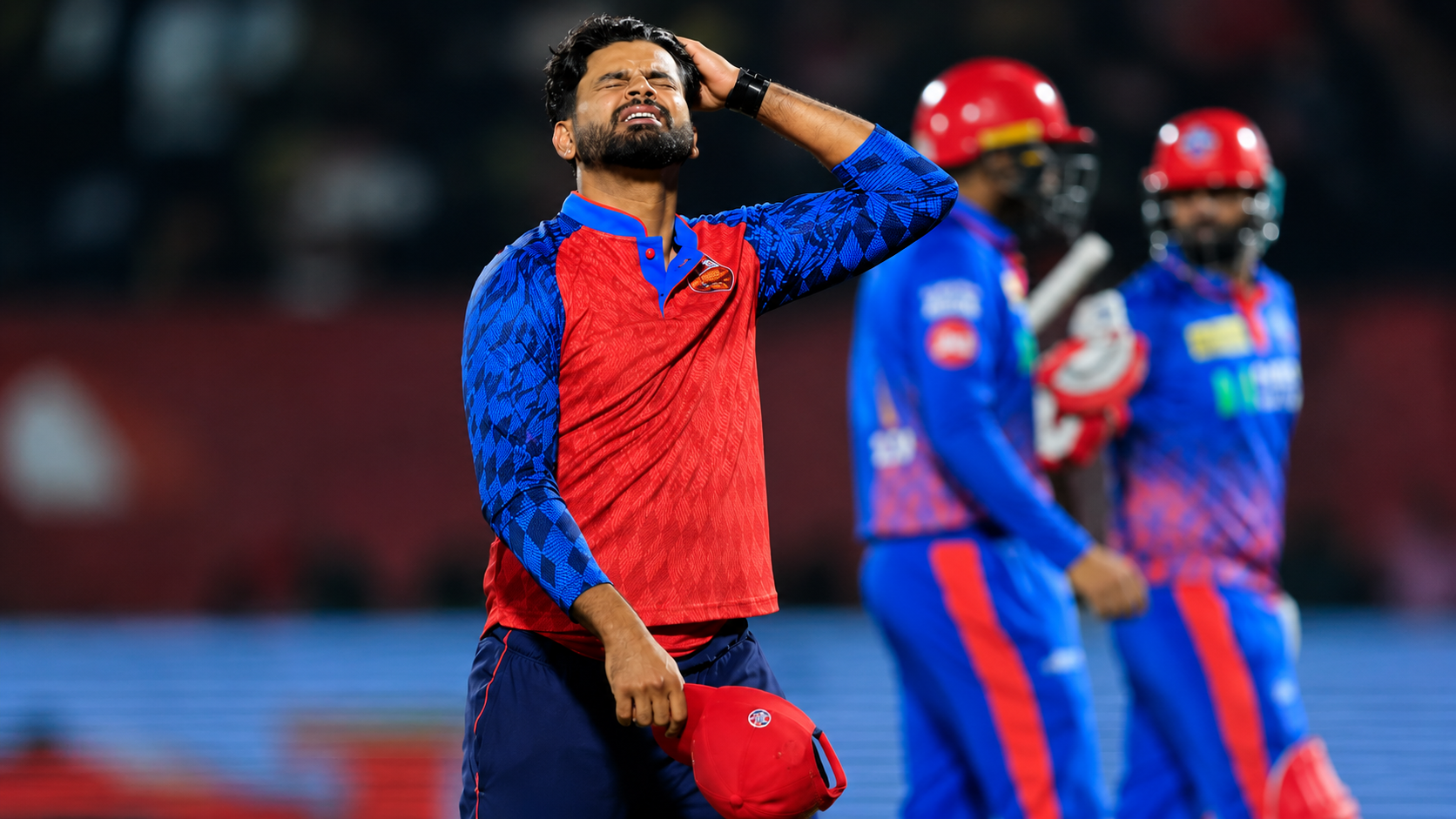
PBKS's Batting Blaze Masks a Bowling Freefall at Dharamsala
Result: Delhi Capitals 216/7 in 19 overs (Ashutosh Sharma 24 off 10, Madhav Tiwari supporting role, KL Rahul fluent contribution) beat Punjab Kings 210/5 in 20 overs (Prabhsimran Singh and Priyansh Arya explosive starts) by 3 wickets.
Venue: Himachal Pradesh Cricket Association Stadium, Dharamsala
Date: Monday, 11 May 2026
Punjab Kings scored 210 runs. They went 22 off the very first over of the innings. They set multiple opening-over records in the IPL. Their captain finished the night talking about a 30-run shortfall on the surface. And yet, at the end of the night, the scoreboard read clearly: Delhi Capitals 216/7 in 19 overs. Three-wicket win. PBKS lose their fourth match on the bounce.
This is the new reality for a team that, just a few weeks ago, was the only undefeated franchise in IPL 2026. After seven wins in a row, Punjab Kings have now suffered four consecutive defeats — to RCB, SRH, MI (wait, that was earlier), and now DC. The slide is no longer a blip. It is a pattern. And behind the explosive batting numbers and the headline-grabbing opening overs lies an uncomfortable truth that the team management can no longer paper over: PBKS's bowling has become the single biggest threat to their playoff campaign.
The Innings That Should Have Won the Match
Asked to bat first by Axar Patel, Punjab Kings began the night like a side determined to lay their problems to rest. Openers Prabhsimran Singh and Priyansh Arya walked out and tore into Mitchell Starc in the opening over. The Australian quick — making his return to the DC XI — was hit for 22 runs in the very first over, an opening-over total that broke multiple PBKS records, including their highest-ever first-over score in IPL history.
The four boundaries in the over set a powerplay tempo that PBKS rarely let go. By the end of the field restrictions, the score was already deep into the 60s. Arya played his typical pull-and-cut game, while Prabhsimran was clean and clinical through the V. Even after Arya fell early, the platform had been laid for a total well past 200.
Shreyas Iyer's contribution was modest by his standards, but the lower-middle order — including Marcus Stoinis and Shashank Singh — kept the scoreboard ticking. By the end of the 20 overs, PBKS had posted 210/5. On almost any IPL pitch, that is a defendable score. On a Dharamsala surface where the ball was nipping around with the new ball — as both captains acknowledged later — 210 should have been an easy total to protect.
The Bowling Freefall
Defending the total, however, is where the wheels came off. Delhi Capitals' chase started fluently and built throughout. The PBKS bowling attack — supposedly one of the most balanced units in the tournament with Marco Jansen, Arshdeep Singh, Yuzvendra Chahal, and Lockie Ferguson — failed to find rhythm or control at any phase.
What was particularly damaging was the bowling in the death overs and the middle phase. PBKS at one stage had Delhi at 175/6 — a position where, with three overs left, even an average bowling unit should have closed the deal. Instead, lower-order contributions from Ashutosh Sharma (24 off 10) and supporting cameos from Madhav Tiwari chipped away at the equation. A dramatic penultimate over involving a no-ball and several boundaries effectively ended the game.
Shreyas Iyer's Honest Diagnosis
The PBKS captain did not mince words at the post-match presentation. Asked what went wrong, Iyer was characteristically direct in pointing the finger at the team's two consistent areas of struggle — fielding and bowling.
He suggested that 30 runs more on this surface would have made the chase considerably harder, given how the ball was seaming and the variable bounce on display. He then offered a clear technical observation about what the bowlers had failed to execute. According to Iyer, on a wicket like this, hitting a hard length — slightly back of a good length, into the pitch — was the most effective option, especially when a new batter was at the crease. Repeating that delivery, he argued, eventually creates a mis-hit and a wicket-taking opportunity. PBKS, by his own admission, had been short of planning in this phase.
It was a captain talking about a problem that has lingered for weeks. Iyer's words were measured, but the frustration was unmistakable.
The Fielding Issue Returns
Just days after head coach Ricky Ponting called the team's catching trouble "a virus" following their loss to SRH, the fielding problems resurfaced against Delhi. Multiple half-chances went down. Run-out opportunities were missed. The body language in the field — once Punjab's strength early in the season — had a heaviness to it that betrayed a side under pressure.
Spin-bowling coach Sairaj Bahutule, who is reportedly being lined up for the Team India spin coach role, will be acutely aware of how quickly the team's fielding standards have declined. Whether or not he steps away to take the national role, the franchise has a serious fielding rebuild on its hands.
The Numbers Behind the Decline
PBKS's Bowling Through IPL 2026
- First 7 matches (all wins): Disciplined, with consistent powerplay strikes and tight death overs
- Last 4 matches (all losses): Conceded 200+ in three out of four; powerplay economy ballooning above 9; death-over conceding rate among the worst in the league
- Dropped catches this season: 16 — joint-highest in IPL 2026 alongside CSK
- Catch efficiency: 71.43% — the worst of all 10 franchises
The Batting, Ironically, Has Been Holding Up
- Punjab posted 200+ in their last four games — yet won none of them
- Prabhsimran Singh and Priyansh Arya have been one of the league's most consistent opening pairs
- Shreyas Iyer continues to hold the middle order together when needed
The story, then, is clear: the batting has done what it needs to. The bowling, increasingly, has not.
The Tactical Concerns
Three specific tactical issues continue to define PBKS's bowling slide:
1. New Ball Inconsistency
Arshdeep Singh, who began the season in peak form, has gone wicketless or expensive in three of the last four games. Marco Jansen, signed as a premium overseas pick, has not delivered match-defining spells with the new ball.
2. Death-Over Erosion
Lockie Ferguson's pace has been useful but his execution at the death has been mixed. The team has had no clear "go-to" bowler for the final two overs in three of their last four losses.
3. Spin Match-Ups
Yuzvendra Chahal, India's most successful T20 spinner of the last decade, has had a quieter season than expected. The team has not been able to use him as a wicket-taking force in the middle overs — partly due to opposition match-ups against right-handers and partly due to flat surfaces.
What This Means for the Playoff Race
Punjab Kings
- Position: 4th on IPL 2026 points table
- Points: 13 from 11 matches
- Form: Four consecutive defeats
- Outlook: Still mathematically in the top four, but the momentum is concerning. Net run rate, after this loss, is now under pressure as well.
Delhi Capitals
- Position: 7th on IPL 2026 points table
- Record: 5 wins in 12 matches
- Status: Still mathematically in the race; the win keeps their slim playoff hopes alive
- Bright spot: Two consecutive impressive chases of 200+ — a sign of life in their final stretch
The Ponting–Iyer Relationship Test
Ricky Ponting and Shreyas Iyer entered the season with optimism, having retained much of their successful 2025 spine. Seven straight wins to start the campaign suggested everything was in order. The slump since then, however, has brought scrutiny back. Ponting has used phrases like "a virus" to describe the catching slide. Iyer has used phrases like "short of planning" to describe the bowling. Both diagnoses point to the same broader concern: the team has not been able to maintain the standards that made them so formidable at the start of the season.
The leadership pair will need to find a way out of this collective dip. With only three matches left in the league stage, there is no time for prolonged tactical experiments. The need is for a clear bowling plan, sharper fielding intensity, and a return to the basics that delivered the seven-match unbeaten streak.
The Bigger Concern: Pressure Compounding
The most insidious aspect of PBKS's slide is how pressure is compounding. Every dropped catch adds doubt to the fielder's next opportunity. Every leaked boundary adds pressure to the bowler's next over. Every loss adds weight to the dressing room. Sairaj Bahutule himself spoke about this phenomenon after the SRH loss — that fielding and bowling slumps tend to feed themselves, that each error makes the next one more likely. PBKS are in the middle of exactly that cycle.
Breaking it requires either a moment of individual brilliance — a captain's knock, a five-wicket haul, a stunning fielding effort — or a tactical reset that disrupts the spiral. Neither came in Dharamsala. Whether they come in the next three games will determine whether Punjab Kings make the playoffs or join Lucknow Super Giants and Mumbai Indians on the elimination list.
What's Next?
Punjab Kings have a few days to regroup before their next outing. The team management will likely spend most of that time in tactical meetings, bowling drills, and fielding sessions — and possibly some quiet conversations with senior players about the direction of the team.
The remaining matches are not all winnable on paper, but for a side as talented as this one, picking up two wins from three should be achievable. Whether they can do it while their bowling unit is in freefall, however, is the central question. The batting unit can score 210 again. They can score 220. But the question PBKS need to answer in the next two weeks is simpler — and harder: how do you stop the other team from scoring 220 in chase?
The Verdict
The blaze at the top of the innings was glorious. The records were real. The opening over was historic. But none of it was enough. Punjab Kings' problem in IPL 2026 has stopped being a batting question and has fully become a bowling and fielding one. Until they fix that, every 210 they post will feel like a tease — a flash of brilliance that the other team is now confident they can chase down.
From 7-0 to 4-in-a-row. From top of the table to suddenly looking over their shoulder. The IPL has a way of exposing weakness eventually, and Punjab Kings are learning that lesson, one batting blaze and one bowling freefall at a time.