Fire and finesse: Shafali and Smriti's contrasting brilliance powers India's World Cup charge
They could hardly be more different — Shafali Verma all raw power, Smriti Mandhana all silk and timing — but together India's openers form one of the most dangerous combinations in women's cricket. At the 2026 Women's T20 World Cup, the contrast came alive at Headingley, where their 115-run blitz powered India to a record 209 for five and a thumping 95-run win over the Netherlands, with Mandhana's
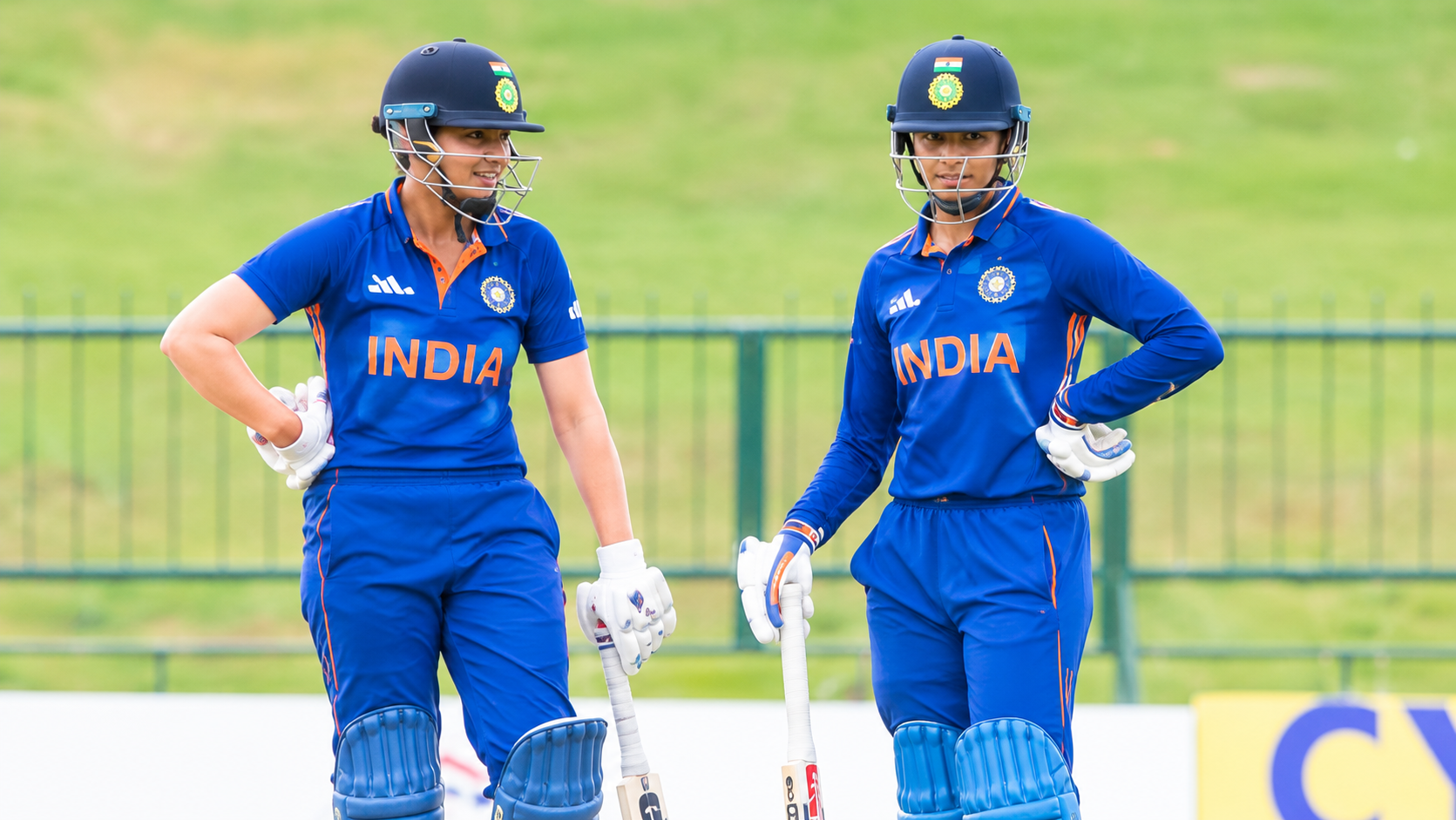
Great opening partnerships often work because the two players are nothing alike. India's women have the perfect example at the top of their order, where the raw, fearless power of Shafali Verma meets the silky, precise stroke-making of Smriti Mandhana — a contrast in styles that has become one of the most dangerous combinations in the women's game.
One is the hammer, the other the scalpel. And at the ICC Women's T20 World Cup 2026, the pair underlined exactly why their blend of brute force and finesse makes India such a feared side, tearing the Netherlands apart at Headingley to send a statement rippling through the tournament.
Two Styles, One Devastating Effect
The beauty of the partnership lies in its balance. Verma is all controlled aggression — a player who looks to dominate from the very first ball, taking the attack to the bowlers and putting fielding sides on the back foot before they have had a chance to settle. When she connects, the game can shift in the space of a single over.
Mandhana, by contrast, is a study in elegance. The vice-captain relies on timing, placement and a classical technique that allows her to find the boundary without ever appearing to force it. Where Verma overwhelms, Mandhana dissects — and together they give India both the explosive starts and the stability that the shortest format demands.
The Leeds Statement
That combination was on full display in India's group-stage clash with the Netherlands at Headingley in Leeds. The openers shared a blistering stand of 115, one of the highest opening partnerships India have produced in Women's T20 World Cup history, and the platform proved decisive.
Powered by their start, India went on to post 209 for five — their highest total in the history of the competition — before bowling the Netherlands out for just 114. The 95-run victory, India's second in succession, lifted them to the top of Group A and confirmed their billing as one of the tournament favourites.
Shafali Answers the Doubts
For Verma, the innings carried added significance. Her form had come under scrutiny in the build-up to the tournament, with a lean run in the lead-up series doing little to quiet the questions about her consistency in T20 cricket. Here, she responded in the most emphatic manner possible.
She made 55 from 38 balls, but what pleased her most was the maturity of the knock. Rather than forcing the issue when conditions made strokeplay difficult, she was content to rotate the strike and pick up singles until the bad balls arrived. It was, by her own account, a more measured display than her reputation might suggest — proof that there is a thinking cricketer behind the big hitting.
The All-Rounder Emerges
Verma was not done there. Turning her arm over with her off-spin, she claimed three wickets for 20 runs, helping to trigger the Netherlands' collapse and rounding off a complete individual performance.
In doing so, she joined rare company, becoming only the third player to score a half-century and take three wickets in the same Women's World Cup match, following the West Indies' Hayley Matthews and South Africa's Sune Luus. Her captain was quick to highlight her growing value with the ball, suggesting that Verma has the tools to develop into a genuine all-rounder capable of giving India breakthroughs whenever they are needed.
Mandhana's Elegant Command
If Verma provided the fireworks and the bonus wickets, Mandhana supplied the class. The left-hander stroked her way to 74 from 47 deliveries, at one point dispatching four boundaries in a row, in an innings that earned her the Player-of-the-Match award.
It was her second consecutive half-century of the tournament, reached off just 36 balls, and yet she remained typically measured in her own assessment. Acknowledging that she still felt a work in progress and was not quite middling the ball to her satisfaction, she reserved her warmest words for her opening partner, expressing genuine delight at seeing Verma back among the runs.
The Blend That Defines India
The importance of this duo to India's hopes has been a recurring theme in the conversations surrounding the team. The blend of Mandhana's stability and Verma's explosiveness is widely regarded as India's single biggest weapon, capable of seizing control of a contest in the powerplay before the opposition has found its feet.
Several respected voices in the game have made the same point ahead of the tournament: when these two get going together, they can take a match away from the other side almost on their own. Their ability to apply pressure from the very first delivery gives India a head start that few teams can match, and a foundation on which a deep batting order can build.
From Doubts to Dominance
What makes the Leeds performance all the more notable is the backdrop against which it came. India had arrived at the World Cup on the back of a series defeat to hosts England, a result in which the opening pair had struggled badly, managing only modest starts across the matches.
Those difficulties had prompted concern that the partnership might take time to fire when it mattered most. Instead, Verma and Mandhana have answered the doubts head-on, stitching together exactly the kind of commanding stand that had eluded them in the warm-up. The turnaround could hardly have been better timed.
The Road Ahead
Of course, sterner examinations lie in wait. India know that the challenges will intensify as the tournament progresses, with the likes of South Africa and Australia representing a different level of opposition to the one they faced in Leeds.
It is against those sides that the value of a fast, fearless start becomes even greater. India have never been crowned champions of the Women's T20 World Cup, and if they are finally to break that duck, much will depend on how often their opening pair can deliver the kind of platform they produced against the Netherlands.
The Final Word
Cricket has always celebrated contrast, and few current pairings embody it as vividly as Shafali Verma and Smriti Mandhana. One bludgeons, the other glides; one imposes, the other persuades. Yet the effect is the same — opposition attacks dismantled and India handed the initiative.
On the evidence of their work in Leeds, the hammer and the scalpel are operating in perfect harmony. For India, chasing a first global T20 crown, there could be no more encouraging sight.
Match Snapshot
- Match: India Women beat Netherlands Women by 95 runs, ICC Women's T20 World Cup 2026, Headingley, Leeds
- India: 209 for 5 — their highest total in Women's T20 World Cup history
- Netherlands: 114 all out in 17.3 overs
- Opening stand: 115 between Smriti Mandhana and Shafali Verma — among India's highest in the tournament's history
- Smriti Mandhana: 74 off 47 balls (Player of the Match) — her second straight fifty of the event
- Shafali Verma: 55 off 38 balls and 3 for 20 with the ball — only the third player to make a fifty and take three wickets in a Women's World Cup match
- Also starred: N Sree Charani with 4 for 19, including three wickets in an over
- The result: A second straight win takes India to the top of Group A