The case for the Hitman: why Rohit Sharma still belongs in India's 2027 World Cup plans
At 40, with fitness questions and India deep into a youthful rebuild, Rohit Sharma's place in the 2027 World Cup picture is anything but certain. Yet his record on the game's biggest one-day stage — 1,575 runs across three World Cups, a tournament-record five centuries in 2019, and a captain's charge to the 2023 final — makes a powerful case that India shouldn't be too hasty to move on.
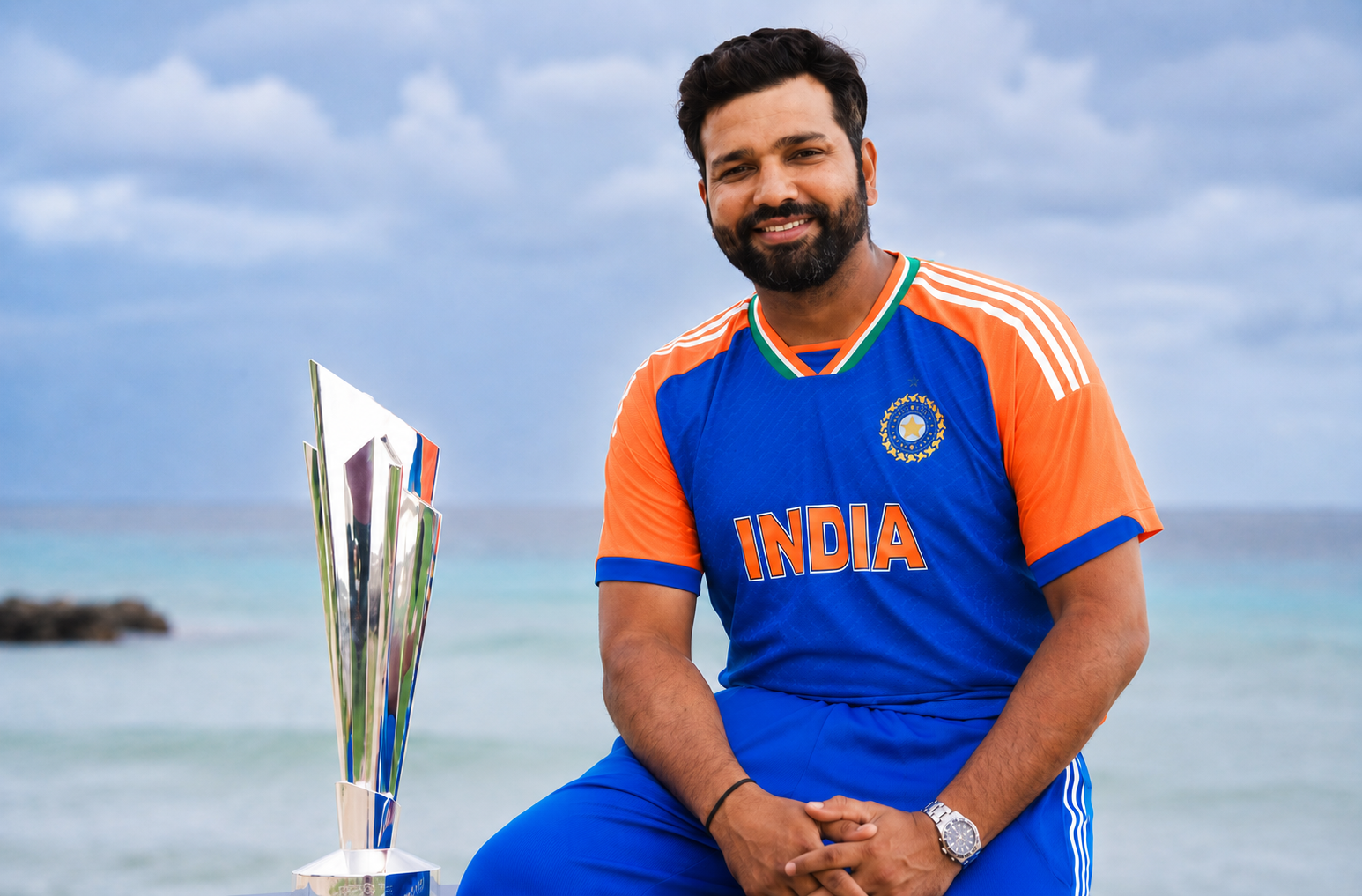
With the countdown to the 2027 ODI World Cup in South Africa, Zimbabwe and Namibia now under way, India have begun the delicate business of shaping the squad they hope will end their long wait for a 50-over title. Amid the planning, one question refuses to go away: is there still a place for Rohit Sharma?
By the time the tournament arrives, the man known as the Hitman will be 40, and his selection is far from a formality. Yet for all the doubts, a closer look at his record makes a compelling case that India would be unwise to move on from one of the finest World Cup performers the game has seen.
The Uncertainty Around Rohit
The reasons for the question marks are understandable enough. Rohit's recent past has been shadowed by fitness concerns, including a recurring hamstring problem that limited both his availability and his mobility during the most recent IPL season, where he often featured in a reduced role and produced modest returns.
There is also the broader direction of travel. With Shubman Gill now leading the ODI side and a clear appetite for a younger, more sustainable core, India are in the midst of a rebuild. The recent emergence of explosive batting options has only intensified the competition for top-order places, and against that backdrop, a veteran approaching his fifth decade can look like a player from a previous era. To his credit, Rohit has responded with a visible fitness transformation, shedding significant weight in pursuit of greater agility — but the questions persist.
A World Cup Record Few Can Match
What that uncertainty risks overlooking, however, is just how good Rohit has been on cricket's biggest one-day stage. Across the 2015, 2019 and 2023 World Cups, he has amassed 1,575 runs in 28 innings at an average of 60.57 and a strike rate north of 105, with seven centuries and six fifties — numbers that place him firmly among the all-time greats of the competition.
The standout campaign came in England in 2019, when he finished as the tournament's leading run-scorer with 648 runs in nine matches at an average of 81, including a record-breaking five centuries in a single World Cup. Four years later, on home soil and as captain, he reinvented his approach, attacking from the very first ball and striking at almost 126 on his way to 597 runs, driving India to the final. That blend of weight of runs and adaptability across eras is exceptionally rare.
Built for the Big Stage
Beyond the raw totals, it is Rohit's temperament that has set him apart. He has long shown an ability to read conditions early, rotate the strike intelligently and then unleash his trademark power, a method that has yielded more than fifty sixes in World Cup cricket alone. In the high-pressure environment of knockout matches, that composure is a quality few of India's younger openers have yet had the chance to prove.
His record against the strongest opposition reinforces the point. He has plundered runs against Pakistan, Bangladesh, England and South Africa among others, demonstrating that the bigger the occasion and the better the attack, the more he tends to rise. For a side chasing a global trophy, that kind of dependability against quality bowling is precisely what tends to make the difference at the business end of a tournament.
Tailor-Made for African Conditions
The nature of the 2027 tournament only strengthens the argument. The host venues will offer a varied examination: South African surfaces that can assist the seamers early before flattening out, alongside grounds in Zimbabwe and Namibia that will test a batter's adaptability. Negotiating that variety, while still scoring at a healthy rate, is a specific skill — and one Rohit has demonstrated repeatedly.
His success across markedly different environments, from Australia in 2015 to England in 2019 and India in 2023, suggests a player well equipped to handle whatever the African pitches throw up. The ability to build an innings on a tricky surface without sacrificing intent is not easily taught, and it is exactly the asset India may need most in unfamiliar conditions.
The Leadership and Mentoring Dimension
Rohit's value, his supporters argue, also extends well beyond his own bat. Having captained India to the 2023 final and guided a young group through a major tournament, he carries a depth of cricketing intelligence that does not show up on a scorecard. Even without the armband, his presence in the dressing room and in the middle could prove invaluable to a side in transition.
The concern, from this perspective, is what India might lose without him: the steadying influence of a seasoned anchor, the momentum his big hundreds have so often generated, and a calm head in moments of crisis. Teams blessed with experienced match-winners frequently outperform their younger rivals when the pressure peaks, and there is a strong case for folding Rohit into the transition as a guiding force rather than forcing an abrupt farewell.
The Other Side of the Debate
None of this, in fairness, makes the decision straightforward. Age and fitness are genuine considerations, not minor footnotes, and a player who struggled for full match-fitness in franchise cricket cannot simply be assumed to last the distance of a gruelling global event two years away. There is a real risk in building around a 40-year-old at the expense of developing the next generation.
India's selectors must also weigh the claims of the younger players knocking loudly on the door. The format is unforgiving, and squad places handed to the past can mean opportunities denied to the future. Those who favour a clean rebuild would argue that the time to invest in emerging talent is now, while there is still a long runway before the tournament, rather than risk a difficult mid-cycle transition later. It is a legitimate position, and one the team management will have to balance carefully.
A Measured Verdict
Where does that leave the debate? Somewhere in between, most likely. The strongest argument for Rohit is not nostalgia but evidence: a body of World Cup work, a record against the best, and a temperament for the big moment that very few possess. Those are not qualities to be discarded lightly.
Equally, his inclusion cannot be unconditional. It hinges on him remaining fit and maintaining a reasonable level of form between now and 2027. If he can do that, the case for taking his experience to Africa becomes difficult to dismiss. If he cannot, India have every reason to look ahead. For now, the sensible conclusion is that the Hitman has earned the right to be judged on those terms — not written off before the contest has even begun.
The Final Word
India's pursuit of a first 50-over World Cup crown since 2011 will demand a careful blend of youthful energy and proven know-how. In Rohit Sharma, they have a player who, at his best, embodies the latter as well as anyone in the modern game.
Whether his body and his form will allow him to answer the call one more time remains to be seen. But on the strength of what he has produced when it has mattered most, India would do well to keep that door firmly open.
Rohit's ODI World Cup Record at a Glance
- Overall (2015–2023): 1,575 runs in 28 innings at an average of 60.57, strike rate of 105.49, with 7 hundreds and 6 fifties
- 2015: 330 runs (highest score 137) at 47.14
- 2019: 648 runs — the tournament's leading scorer — at an average of 81, with a record five centuries
- 2023: 597 runs at 54.27, striking at almost 126 as captain en route to the final
- Big-match pedigree: More than 50 sixes in World Cup cricket, with strong records against Pakistan, Bangladesh, England and South Africa
- The 2027 context: He will be 40 during a World Cup co-hosted by South Africa, Zimbabwe and Namibia