'The best thing for me': Stokes opens up on his shock international retirement decision
Ben Stokes stunned cricket by announcing his international retirement mid-match at Trent Bridge, calling it "the best thing for me right now." Ending a defining 15-year England career across 122 Tests, the 35-year-old admitted he may have burnt himself out and had run out of fight after a turbulent year, choosing to walk away to rediscover his love for the game.
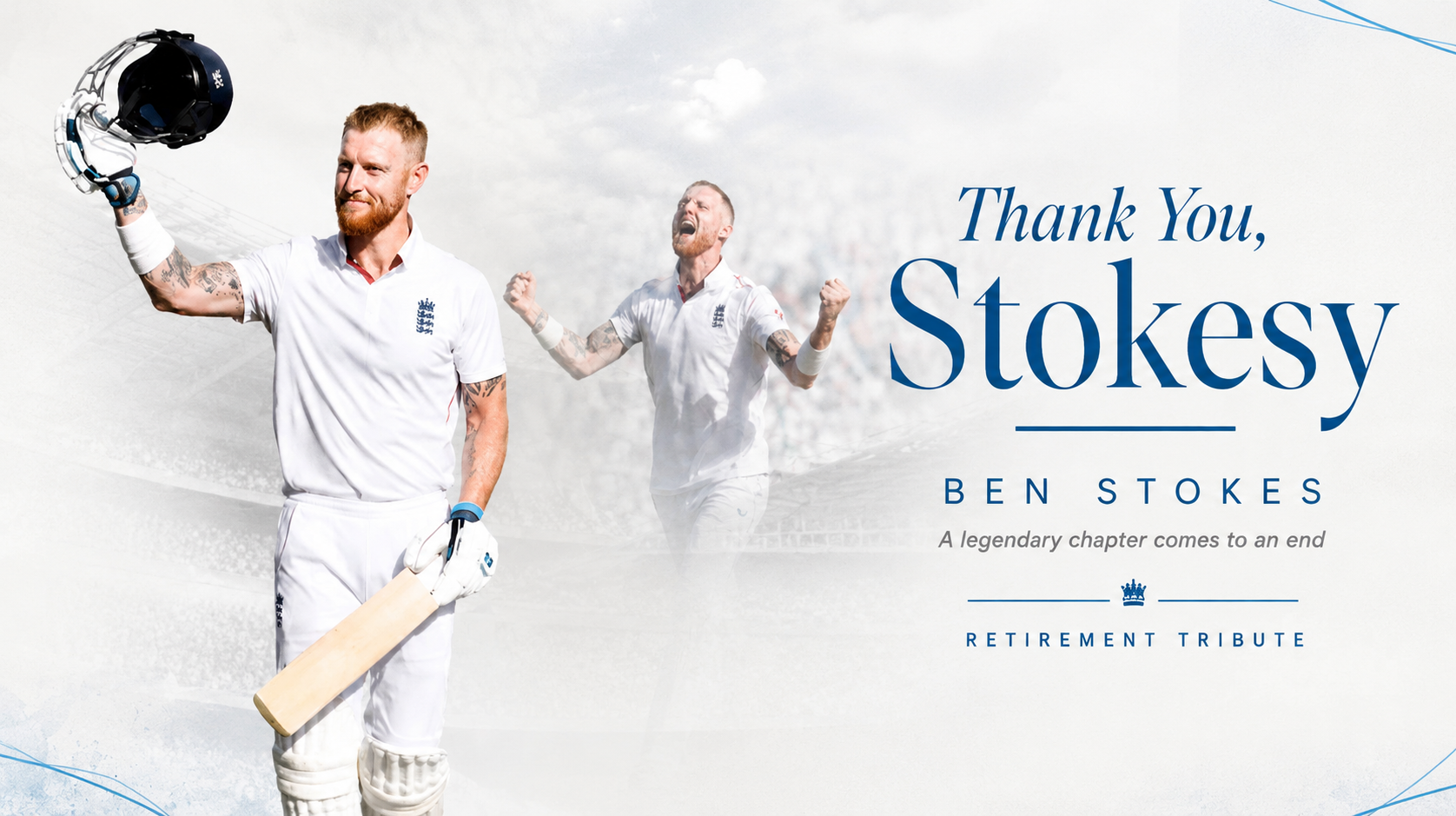
Ben Stokes has lifted the lid on the emotional reasoning behind his shock retirement from international cricket, insisting the decision is "the best thing for me right now." The England captain stunned the cricketing world by confirming, mid-match during the series decider against New Zealand at Trent Bridge, that the game would be his last in an England shirt — drawing the curtain on a defining 15-year career.
The announcement, released in a statement during the afternoon session on Day 4 while the 35-year-old was bowling, brought one of the most influential careers in English cricket history to a sudden and dramatic close.
'Genuinely the best thing for me'
Speaking afterwards, Stokes was candid about a choice that had clearly weighed heavily on him. He explained that, while it might sound selfish, the decision was genuinely the best thing for him at this point, and that he hoped it would prove to be the right call for the team going forward as well.
At the heart of his reasoning was a desire to protect his relationship with the sport. He said the move came down to what would allow him to keep loving a game he has played since childhood and which has given him a career, suggesting the relentless demands had begun to take their toll.
'Run out of fight'
Stokes admitted he may have pushed himself to breaking point in his efforts to stabilise English cricket. He conceded he might have "burnt himself out" trying to put the team back on a stable footing after the humiliating 4-1 Ashes defeat in Australia last winter.
He spoke of going through rocky times personally, of feeling he was forcing himself to carry on because it was the right thing to do rather than something he truly wanted. There had been, he said, moments during the week that were really tough — and which only reinforced the sense that he was making the right decision.
A symbolic final act
Fittingly for a player who so often delivered theatre, Stokes marked the moment in style. With the very first ball he bowled after the announcement became public, he took a wicket — the catch held by Harry Brook, widely tipped as a potential future England Test captain.
It was a moment that captured the essence of his career: a man who repeatedly produced the extraordinary when it mattered most, doing things other players could not or would not dare to attempt.
The backdrop to the decision
The retirement followed a turbulent few weeks. Stokes had been dropped for the second Test against New Zealand over his involvement in a nightclub incident after the first Test, an episode investigated by both the ECB and the independent Cricket Regulator.
While the Regulator found insufficient evidence of any regulatory breach, Stokes admitted he had felt "flat" and unsettled even before the saga, and that he had not been enjoying the responsibility of resuming the captaincy after the Ashes. He was recalled for the Trent Bridge decider, which became his farewell.
A career that defined an era
Stokes bows out as one of the greatest all-rounders the game has seen. He finishes his Test career with 7,273 runs and 252 wickets across 122 matches, becoming only the second player after Jacques Kallis to score more than 7,000 runs and take over 250 wickets in the format. He also represented England in 114 ODIs and 43 T20Is.
His legacy is studded with iconic moments — the 2019 World Cup final heroics against New Zealand at Lord's, the winning runs in the 2022 T20 World Cup triumph in Melbourne, and his transformative leadership of the Test side. ECB chairman Richard Thompson hailed him as one of England's greatest-ever cricketers and a defining figure of his generation.
What comes next
Stokes is not stepping away from the game entirely. He spoke with excitement about the next chapter, returning to play for his boyhood club Durham, where he can rediscover his enjoyment of cricket away from the unique pressures of international captaincy.
For England, the focus now turns to life after Stokes, with the identity of the next Test captain set to dominate the conversation in the days ahead.
The final word
This was a sudden, emotional and unmistakably Stokes-like farewell — dramatic, on his own terms, and delivered in the middle of a contest. He leaves international cricket having shaped an era, and walks away in search of the joy that first drew him to the game. English cricket will move on, but a figure of his stature and impact will not be easily replaced.