'Somewhere we are missing a trick': Gill sounds the alarm on India's injury epidemic
Five players from India's original 15-man squad were missing at Lord's, and captain Shubman Gill has had enough. After the series-deciding defeat, he warned that players unable to last even a three-match series spells trouble for a 2027 World Cup campaign requiring eleven games in a row, calling on both the squad and the BCCI medical team to fix a worsening fitness problem.
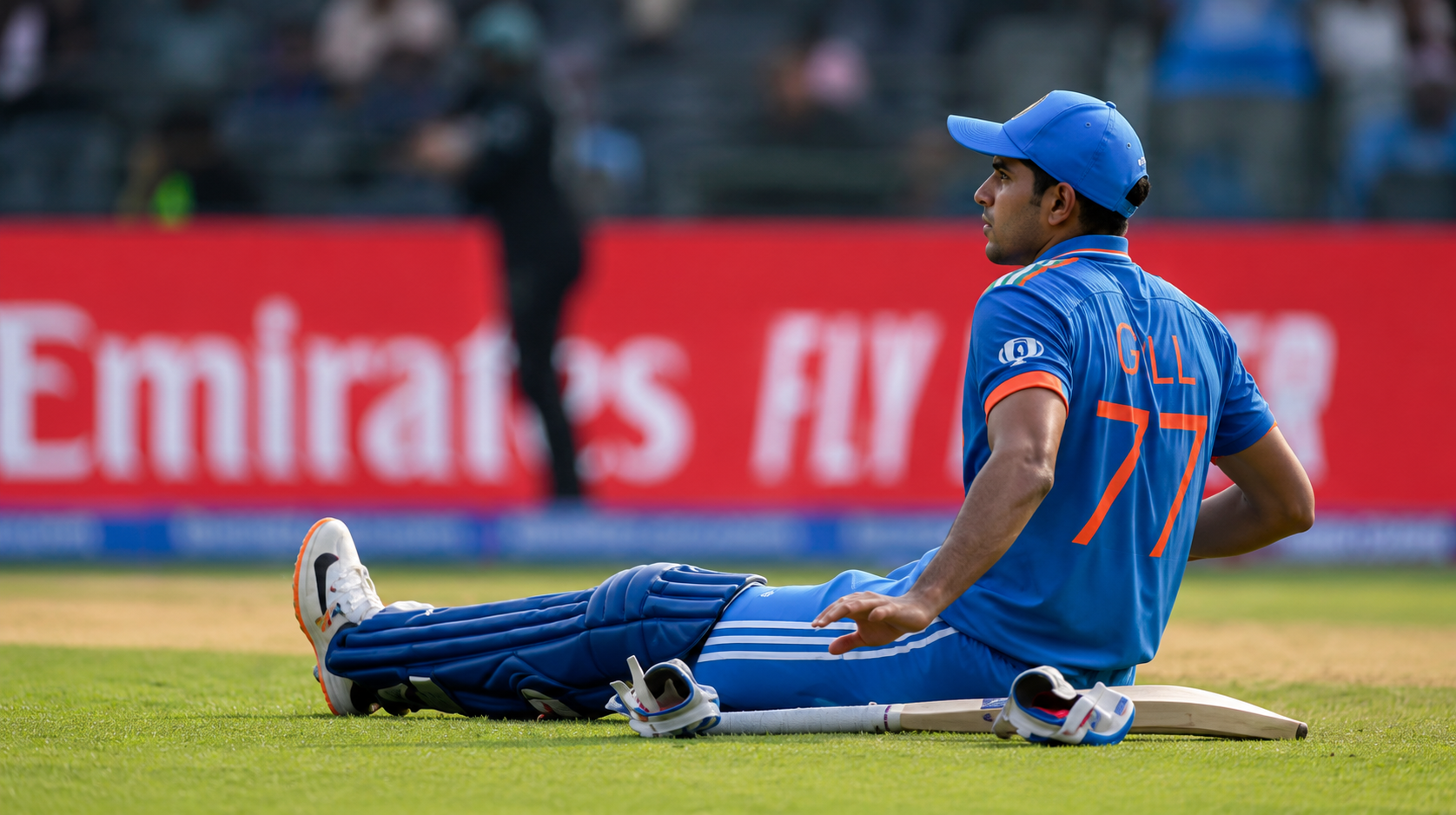
India captain Shubman Gill has issued a pointed warning about his team's mounting injury problems, insisting the side cannot remain a serious contender for the 2027 ODI World Cup if players continue breaking down every few matches. Speaking after the series-deciding defeat to England at Lord's, Gill called for a collective push on fitness, involving both the playing group and the BCCI medical team.
His frustration was rooted in a stark reality: India were unable to field anything close to their strongest XI in the biggest match of the tour, with a significant chunk of the original squad unavailable.
Five missing from the announced squad
Gill laid out the scale of the problem in blunt terms. He noted that of the first squad announced for the England ODI series, a minimum of five players did not take the field in the decider — a remarkable attrition rate across a three-match assignment.
The absentees made for a lengthy list. Jasprit Bumrah missed out after an impact injury sustained during the Cardiff ODI, Washington Sundar was ruled out with a hamstring problem from the same match, Harshit Rana was sidelined by a hamstring issue picked up during the England T20I series, and Nitish Kumar Reddy never even travelled to the UK after a quadriceps injury in the home ODIs against Afghanistan.
'Missing a trick'
The captain was candid about the disruption caused. He explained that when one player is injured you look at a different combination, and when two are unavailable you adjust again, but if a player is missing after every single match then, in his words, somewhere the team is missing a trick.
It was a rare public expression of frustration from a captain forced to reshuffle his side repeatedly, sometimes at the last minute, and denied the chance to build any continuity across a short series.
The World Cup warning
Gill framed the concern squarely around the challenge ahead. Keeping the World Cup in mind, he pointed out, India will need to play eleven matches in a row — yet at present, players are unable to get through a series of just two or three games.
He observed that players might feature in one or two matches before picking up a niggle, forcing the management into combinations they had never intended to field. For a side with genuine ambitions of lifting the trophy in 2027, that pattern represents a serious structural weakness.
A shared responsibility
Importantly, Gill did not single out any individual or department for blame. He framed the issue as one for the group as a whole, encompassing both the players and the BCCI medical team, stressing that improving fitness must become a collective priority going forward.
It is a measured stance from a captain who has himself endured recent fitness scares, including retiring hurt during the first ODI at Edgbaston with discomfort in his right leg, before recovering to feature in the remainder of the series.
A wider pattern of setbacks
The problem extends beyond this tour. Hardik Pandya has been absent through a leg injury, KL Rahul missed the second ODI due to illness, and Varun Chakaravarthy was ruled out of the Zimbabwe assignment with a Grade 2 hamstring tear sustained at Trent Bridge.
Taken together, the sheer volume of unavailability across formats has left India's think tank in a near-constant state of improvisation, unable to settle on a preferred combination or give emerging players a consistent run alongside established names.
The cost at Lord's
Nowhere was the impact clearer than in the decider itself. Without Bumrah's control with the new ball and at the death, and lacking Sundar's balance, India were forced into three changes for the biggest game of the series, handing opportunities to Arshdeep Singh, Prince Yadav and the returning KL Rahul.
Gill had backed Arshdeep publicly at the toss, insisting India do not lean too heavily on statistics and regard him as a fine bowler. But asking a reshaped attack to deliver at the Home of Cricket, against a confident England side, proved a demanding ask.
The final word
Gill's comments amount to a candid diagnosis of a problem India can no longer afford to ignore. Talent has rarely been the issue for this side; availability increasingly is. With the 2027 World Cup in South Africa demanding sustained physical resilience across a long campaign, the challenge for India is to ensure their best players are on the field when it matters most — rather than watching from the sidelines, as so many were at Lord's.