233 off 91, 25 sixes: Abhishek's district-cricket demolition is a statement — but is it the right one?
Days after managing just 11 runs in three T20Is in Zimbabwe, Abhishek Sharma erupted with a staggering 233 off 91 balls — including a record 25 sixes — in a Punjab district one-day match for Amritsar. The knock has gone viral and split opinion: proof he's rediscovered his mojo before the Asian Games, or a hollow blitz against weak bowling that means little at international level?
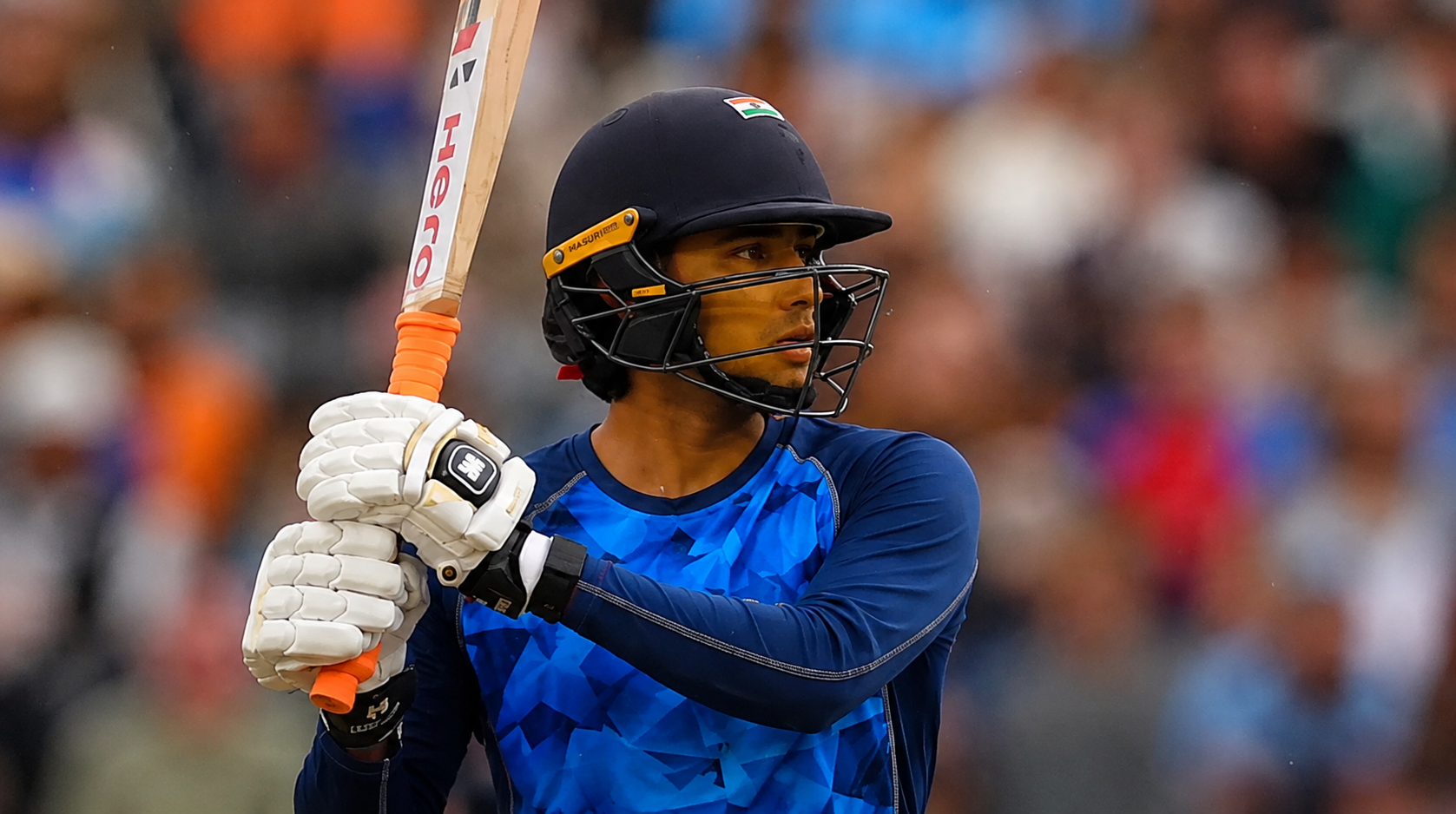
Just days after a chastening return of only 11 runs across three T20Is in Zimbabwe, Abhishek Sharma reminded everyone of his destructive potential in the most emphatic manner imaginable. The India opener unleashed a staggering 233 off just 91 balls, laced with a record 25 sixes, in a Punjab district one-day match — a knock that has gone viral and, in the process, sharply divided opinion.
The innings was a statement of raw power and intent, but it has also reignited a familiar debate about the value of such performances against modest opposition.
An explosion of power-hitting
Returning to competitive action after a short break, Abhishek turned out for Amritsar against Tarn Taran in the Punjab State Inter-District Senior One-Day Tournament at the Gandhi Grounds. What followed was a pure power-hitting masterclass.
The left-hander raced to 233 from 91 deliveries, striking 15 fours and a phenomenal 25 sixes at an astonishing strike rate of 256.04. His onslaught was complemented by a mammoth 305-run opening partnership with Abhay Choudhary, laying the platform for Amritsar to post a colossal 533 for eight in their 50 overs.
A timely response
The timing of the knock made it especially significant. Abhishek had endured a wretched run in international cricket, and his opening spot had come under genuine scrutiny.
His struggles were laid bare by the numbers. After starting the England T20I series with scores of 59 and 43, his returns tailed off to 10, 16 and 3, before he managed just 1, 8 and 2 across the three matches in Zimbabwe. Over his last ten T20I innings, he had registered only a solitary fifty, prompting inevitable questions about his consistency.
A spot under threat
The pressure on Abhishek had been mounting from more than one direction. Despite India completing a 3-0 whitewash of Zimbabwe, his own contribution was negligible, and the emergence of Vaibhav Sooryavanshi — who dominated that very series — has added to the competition for opening berths.
With Sanju Samson also waiting in the wings, Abhishek's place is far from assured. Former India captain Kris Srikkanth had even urged the management to take a tough call and drop the young opener, arguing that opposition bowlers had "sorted him out" at the international level.
The tactical problem
Indeed, Abhishek's recent difficulties have not been a simple case of poor form. Opposition teams have arrived with clearer, more disciplined plans against him, often using spin to create early pressure before attacking him with pace outside the off stump.
In Zimbabwe, the towering Blessing Muzarabani troubled him throughout, dismissing him in all three innings as he failed to reach double figures. Mixing wider deliveries with the occasional short ball, bowlers have repeatedly forced him to reach for shots away from his body — a challenge he must find a better response to at the highest level.
Fans divided
Predictably, the district-level demolition sparked a lively debate on social media. Many supporters were quick to praise the southpaw for bouncing back in style, viewing the innings as evidence that he was working hard on his game and regaining his confidence.
Others, however, urged caution. They argued that performances in district-level cricket should not be equated with international success, questioning the quality of the bowling attack he faced and insisting that consistency against stronger opposition is what truly matters. A section of fans even suggested an established India player should avoid such local tournaments to minimise the risk of injury.
The bigger picture on his form
The context of Abhishek's decline is stark. Before the 2026 T20 World Cup, he averaged over 37 with a strike rate close to 195, establishing himself as one of India's most exciting T20 batters and, at one point, the top-ranked batter in the format.
Since then, those numbers have dropped alarmingly, with his average falling below 20 and his strike rate dipping too. He has now slipped to third in the T20I rankings, underlining just how significant his loss of form has been over recent months.
Eyes on the Asian Games
Whatever the merits of the debate, Abhishek will hope this blistering knock serves as a springboard. He is set to return to national duty for the Asian Games in September, where India will look to defend the gold medal they won previously.
The challenge for the talented left-hander is clear: to carry this explosive domestic rhythm onto the international stage and, crucially, to make the small technical and tactical adjustments required to become a more consistent performer against quality opposition. His ball-striking ability has never been in doubt.
The final word
Abhishek Sharma's 233 was a breathtaking display of clean hitting and a welcome return to the runs after a difficult spell. Yet it also perfectly encapsulates the debate surrounding him — a player of prodigious talent whose challenge lies not in his ability, but in translating it consistently against the sharpest bowling attacks. Whether this knock proves a genuine turning point or merely a viral footnote will depend entirely on how he responds when he next pulls on the India shirt.