21 drops in 13 matches: how butter-fingers became India's costliest weakness
For the "fittest Indian team in history", one flaw keeps resurfacing at the worst moments — catching. Across the UK and Zimbabwe tours, India shelled a staggering 21 chances in 13 matches, drops that captain Shreyas Iyer admitted cost them games. With Sunil Gavaskar demanding poor fielders be dropped, we examine how a supposed strength quietly became India's Achilles heel.
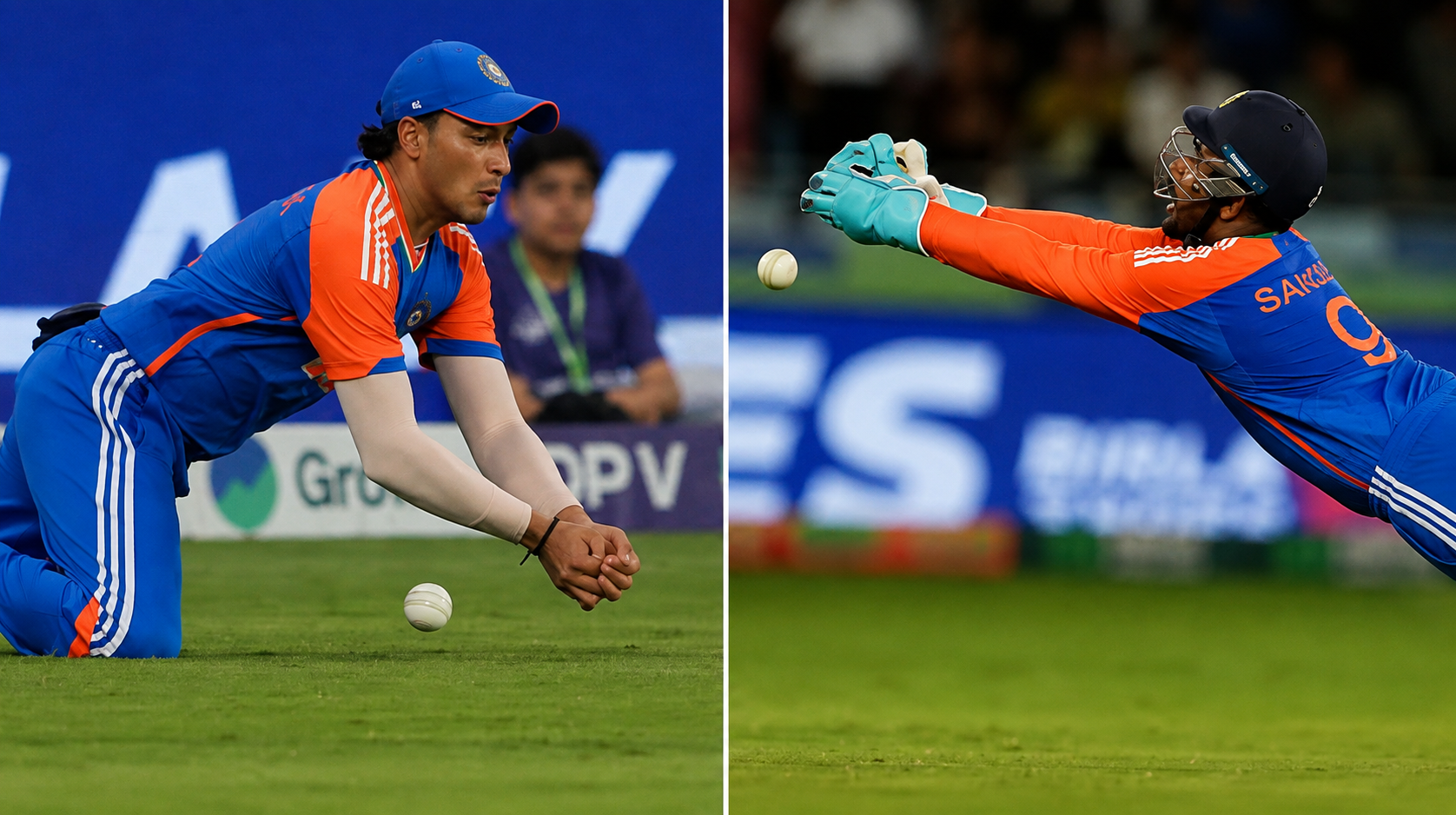
They are widely regarded as the fittest and most athletic Indian side in the nation's cricketing history, yet one persistent flaw continues to undermine them at the most crucial moments: catching. Across the recent tours of the UK and Zimbabwe, India's fielding — long touted as a modern strength — quietly became a genuine Achilles heel, with a startling number of dropped chances proving costly.
The issue, laid bare by an alarming set of numbers, has prompted concern from within the camp and sharp criticism from outside it, raising serious questions ahead of a demanding period of cricket.
The damning numbers
The statistics tell a sorry tale. During the England tour, the Men in Blue put down 11 catches across the white-ball series, a figure that would have haunted them in a series they lost heavily.
The problem did not stop there. In Zimbabwe, India shelled a further 10 chances, despite winning all three matches comfortably. In total, across 13 matches on both tours under Shreyas Iyer's captaincy, India dropped a remarkable 21 catches — a wretched return for a side of their supposed fielding pedigree.
A captain's admission
Crucially, the drops were not merely cosmetic errors; they had a direct bearing on results. Captain Shreyas Iyer was candid in acknowledging their impact after the chastening T20I series defeat to England.
Iyer conceded that dropped catches had cost his side, suggesting India might have chased down totals of 220 to 225 had they held their chances and built momentum in the field. He stressed that fielding plays a key role, particularly overseas with varying ground dimensions, and admitted it was an area the team simply had to work on.
Gavaskar's stinging verdict
The most pointed criticism came from batting legend Sunil Gavaskar, who did not hold back in his assessment. He argued that modern-day cricket demands the highest fielding standards, and that players who consistently fail in the field cannot be guaranteed a place in the XI.
Gavaskar was unequivocal, insisting it was mandatory that an average fielder be shown the door. He contended that there is simply no way a captain should have to hide three or four players in the field, hoping the ball does not travel in their direction — a damning indictment of the current standards.
Not a new problem
While the recent numbers are stark, India's catching woes are far from a novel phenomenon. The issue has resurfaced repeatedly over the years, particularly in overseas conditions where the challenges are magnified.
The struggles were evident during the Test tour of England in 2025, where a string of dropped chances — including grassed opportunities in the slips — repeatedly let England off the hook and contributed to costly defeats. Historically, India's slip catching in particular has been identified as a recurring vulnerability, even in sides packed with otherwise excellent fielders.
Why overseas conditions bite
Part of the explanation lies in the specific demands of fielding away from home. In England especially, the cold conditions, the different behaviour of the Dukes ball, and the larger ground dimensions all combine to make catching more difficult than on familiar subcontinental surfaces.
These factors demand heightened concentration and adaptability, and India's inability to consistently meet those demands has been a common theme across multiple overseas assignments. Ground fielding and athleticism have improved vastly, but holding onto the ball at the critical moment has remained an inconsistent art.
The Gambhir dilemma
The situation places India's coaching staff, led by Gautam Gambhir, in a difficult position. Gambhir has previously defended his players on this front, pointing out that even the best fielders in the world drop catches, and cautioning against harsh individual criticism after every match.
Yet the sheer volume of drops on these tours makes such defences harder to sustain. The onus now falls heavily on the fielding coach to address the technical and mental aspects of catching, and to instil the kind of consistency that has eluded the side.
Echoes of a golden era
The current struggles stand in stark contrast to a celebrated period in Indian cricket. Many point to the influence of players like Yuvraj Singh and Mohammad Kaif in the early 2000s, whose brilliance in the field is credited with transforming India into a formidable fielding unit.
That transformation was seen as a key ingredient in India's rise, with the team taking catches that were previously considered impossible. Recapturing that ethos — where fielding is treated as a non-negotiable core skill rather than an afterthought — is the challenge now facing the current group.
The selection question
Gavaskar's comments have reignited a broader debate about whether fielding ability should carry greater weight in selection. In an era of fine margins, a single dropped catch can swing a match, and the argument that a specialist role must be accompanied by reliability in the field is gaining traction.
Balancing the retention of experienced, match-winning players with the need for a sharp, dependable fielding unit is a delicate act — but one India can no longer afford to ignore, particularly with the 2027 World Cup on the horizon.
The final word
India's fielding has quietly become one of their most pressing concerns, transforming from a perceived strength into a genuine liability. The 21 dropped catches across the UK and Zimbabwe tours are more than just a statistical blemish; they represent lost opportunities and, at times, lost matches. With the captain acknowledging the problem and legends demanding accountability, the message is clear. If India are to fulfil their considerable potential, they must first learn to hold onto the ball — because in modern cricket, catches, more than ever, win matches.