Gold or nothing: the Asian Games draw that saves an India-Pakistan blockbuster for the medal rounds
Cricket fans hoping for an India-Pakistan clash at the 2026 Asian Games will have to wait for the very end. The Nagoya draw has placed the arch-rivals in opposite halves of both the men's and women's competitions, meaning they can only meet in a medal match — gold if both win their semis, bronze if both lose. If just one reaches the final, the marquee fixture won't happen at all.
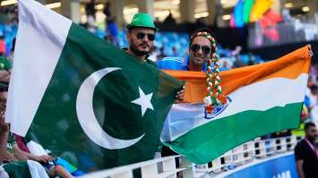
Cricket fans dreaming of an India-Pakistan showdown at the 2026 Asian Games will have to keep their fingers crossed until the very last stage of the competition. The official draw, held in Nagoya, has placed the two arch-rivals in opposite halves of the bracket in both the men's and women's events, meaning any meeting between them is reserved exclusively for a medal match.
It sets up a tantalising scenario in which the sport's most watched fixture can only materialise with a gold or bronze medal on the line — if it happens at all.
The crucial draw
The structure of the competition is the key factor. With India and Pakistan seeded into opposite sides of the draw, there is no possibility of the two nations facing each other in the quarter-finals or semi-finals.
Instead, their paths can only cross in the medal rounds. It is a quirk of the bracket that guarantees any India-Pakistan clash will carry the highest possible stakes, transforming a potential fixture into a genuine title or podium decider.
The two possible scenarios
There are precisely two situations in which fans could get their coveted India-Pakistan encounter. The first, and most eagerly anticipated, is the gold medal match: if both India and Pakistan win their respective semi-finals, they will meet to decide the champions.
The alternative is the bronze medal match. Should both teams lose their semi-finals, they would then be paired against each other in the third-place playoff. Either way, the fixture would come with a medal directly at stake.
The risk of a no-show
However, there is a significant catch that could deny fans the blockbuster entirely. If one of the two nations wins its semi-final while the other loses, there will be no India-Pakistan match at the Asian Games at all.
Knockout cricket, by its very nature, offers little margin for error. A single poor performance in either the quarter-final or semi-final could eliminate one of the teams from the medal contention needed to set up the clash, making the marquee meeting far from guaranteed.
The men's format
The men's T20 tournament features a structured pathway to the knockouts. As the four highest-seeded nations based on ICC rankings, India, Pakistan, Sri Lanka and Bangladesh all received automatic byes directly into the quarter-finals.
The remaining four quarter-final spots are being decided through a preliminary round featuring six lower-seeded teams, split into two groups of three. Group A comprises Afghanistan, Japan and Nepal, while Group B features Hong Kong China, Malaysia and Oman, with the top two from each group advancing.
India's men eye a defence
India will enter the men's competition as the defending champions and firm favourites. Shreyas Iyer will lead a strong squad, which includes the teenage sensation Vaibhav Sooryavanshi, as they look to retain the gold they won at the Hangzhou Asian Games in 2023.
In the quarter-finals, India will face one of the teams that qualify from the preliminary round. The men's edition is scheduled to run from September 24 to October 1, with all matches carrying official international T20 status.
The women's picture
The situation mirrors itself in the women's competition, which begins with the quarter-final stage from September 17 to 22. India's women will start their title defence against hosts Japan.
Should they progress, they would face either Bangladesh or China in the semi-finals. The other quarter-finals see Sri Lanka take on Malaysia and Pakistan face Thailand. As in the men's event, an India-Pakistan clash is confined to a potential gold or bronze medal match.
A different kind of rivalry stage
The multi-team, ICC-sanctioned nature of the Asian Games means India and Pakistan do compete against one another when the draw permits, unlike in bilateral cricket, which the two nations have not played for years. Here, it is purely the structure of the bracket, rather than any refusal to play, that keeps them apart until the closing stages.
That distinction is important, and it is what gives fans genuine hope of a contest. If the cricketing gods align and both sides navigate their respective halves, the tournament could be crowned by the ultimate showpiece.
Echoes of 2023
India will be doubly motivated, having swept both the men's and women's gold medals at the 2023 Games in Hangzhou. Intriguingly, the men's final that year was washed out, with India awarded gold by virtue of being the higher-seeded team after Afghanistan had batted 18.2 overs.
In the women's event, India secured their title with a 19-run victory over Sri Lanka in the final. Those triumphs form the benchmark as India aim to reassert their dominance in the region on the sport's return to the Games.
The final word
The Asian Games draw has set the stage for maximum drama, dangling the prospect of an India-Pakistan clash but reserving it for the moments that matter most. For fans, the equation is simple yet thrilling: both teams must win their way to the final for a gold-medal blockbuster, or both must stumble for a bronze-medal meeting. Anything else, and the marquee fixture will elude us. It is a scenario that adds a compelling layer of intrigue to an already highly anticipated return of cricket to the Asian Games.