Two teams in one shirt: India's split-personality riddle heads to Galle
Which India will turn up in Galle? After a chastening white-ball tour in the UK exposed brittle batting and butter-fingered fielding, India switch to the red ball hoping their sturdier Test identity resurfaces. But an injury-ravaged squad, an unsettled No. 3 and well-documented struggles against spin make this "split-personality" puzzle a genuine test for Shubman Gill's side.
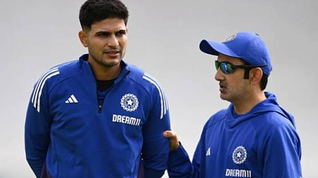
Which version of India will walk out at Galle? That is the puzzle facing Shubman Gill's side as they begin their two-Test tour of Sri Lanka, a team that has increasingly resembled two entirely different outfits depending on the format, the conditions and the moment. Solving this split-personality riddle may well define not just the series, but the direction of India's red-ball cricket in a new World Test Championship cycle.
After a bruising white-ball tour of the UK, the switch to Test cricket offers a chance at reinvention — but the challenges awaiting on turning subcontinental surfaces are formidable.
A tale of two formats
The most obvious manifestation of India's split personality has been the stark contrast between their white-ball and red-ball fortunes. The recent limited-overs tour of Ireland and England laid bare a host of frailties, from brittle top-order batting to inconsistent bowling and, most glaringly, sloppy fielding.
India suffered a shock T20I series defeat in Ireland before being swept 4-0 in England, and lost the ODI series 2-1 despite the presence of senior stars. The Test arena, historically a source of greater stability and identity for this group, now offers a platform to prove that those struggles were format-specific rather than symptomatic of a deeper malaise.
Home comforts versus away examinations
There is another layer to the puzzle: the long-standing contrast between India's dominance at home and their vulnerability in unfamiliar conditions. On home soil, their spinners are kings and their batters masters of turning tracks; away from it, particularly against high-quality spin, the picture has often been less assured.
Sri Lanka, with its slow, gripping surfaces at Galle and the SSC in Colombo, represents precisely the kind of examination that separates a good side from a great one. Negotiating quality spin in these conditions will be the truest test of India's red-ball credentials.
The batting against spin
At the heart of the challenge lies India's much-discussed difficulty against quality slow bowling in recent times. It is a concern that has surfaced even in home conditions, and one that analysts have partly attributed to white-ball habits creeping into the red-ball game.
A packed international calendar, dominated by limited-overs cricket, has restricted opportunities for India's leading batters to hone their technique in domestic red-ball cricket. The response has been proactive, with the likes of KL Rahul deliberately preparing on damp, spin-friendly monsoon pitches, but the middle overs against the turning ball remain the puzzle India must solve.
An unsettled No. 3
The batting order itself carries an element of uncertainty, particularly at the crucial No. 3 position. Sai Sudharsan, who had been earmarked for the role and backed to make it his own, was ruled out of the series with a toe injury.
His absence handed a recall to the prolific Sarfaraz Khan, whose extraordinary first-class average and proven experience made him the selectors' choice over the uncapped Shaik Rasheed. How India settle their middle order, and who steps up in these demanding conditions, will be central to their fortunes.
An injury-ravaged squad
Complicating the picture is a lengthy list of absentees that has forced India to piece together a somewhat makeshift unit. Premier fast bowler Jasprit Bumrah was ruled out of the entire series with a knee injury, paving the way for Auqib Nabi's maiden call-up.
Washington Sundar will miss at least the first Test with a hamstring problem, while Harshit Rana and Nitish Kumar Reddy were also unavailable. The sheer volume of injuries prompted Gill to voice concerns about the team's fitness, and it has left the management improvising with their combinations.
The bright spots
Amid the challenges, there are genuine reasons for optimism. The returns of the experienced Ravindra Jadeja, recovered from a tennis elbow injury, and the reliable Mohammed Siraj add quality and know-how to the side.
The warm-up fixture also offered encouragement, with Devdutt Padikkal scoring an unbeaten 142 and Yashasvi Jaiswal bouncing back from a first-innings duck with a rapid 61. India's spin resources, including Kuldeep Yadav and the uncapped duo of Manav Suthar and Saransh Jain, remain a potent weapon in helpful conditions.
The captaincy dimension
For Shubman Gill, this series represents a significant chapter in his own developing story as Test captain. Leading a young, injury-hit side through a demanding subcontinental assignment is a searching examination of his tactical acumen and man-management.
Guiding this group to a series win, and coaxing consistency from a team prone to fluctuating between the brilliant and the brittle, would be a major statement. It is as much a test of leadership as it is of the players' individual skills.
The stakes
The context adds further weight to the contest. This is India's first assignment in the new World Test Championship cycle, following a disappointing 2-0 home defeat to South Africa, and both sides sit in the middle of the standings, eager to bank valuable points.
India will also be chasing a third successive Test series win in Sri Lanka. A strong start to the cycle is important, and doing so against a Sri Lanka side well-versed in home conditions would send an emphatic message.
The final word
India arrive in Sri Lanka carrying the intrigue of a team still searching for a consistent identity. The white-ball struggles have raised questions, but the red-ball format has traditionally brought out a more assured, resilient version of this side. Whether that version resurfaces in Galle, overcoming the twin challenges of spin and a depleted squad, is the puzzle at the heart of this series. Solve it, and India's WTC campaign begins with real momentum; fail to, and the questions surrounding this fascinating, unpredictable side will only grow louder.