From 90 for 5 to salvation: the Dinusha-Dickwella stand that dragged Sri Lanka back from the brink
Staring down the follow-on at 90 for 5, Sri Lanka were rescued by a defiant 146-run sixth-wicket stand between Sonal Dinusha and Niroshan Dickwella. Dinusha brought up a maiden Test century and Dickwella made a fluent 80 as the pair took the follow-on out of India's hands in Galle. It was a partnership of real substance — and one of the standout rescue acts of Sri Lanka's recent Test history again
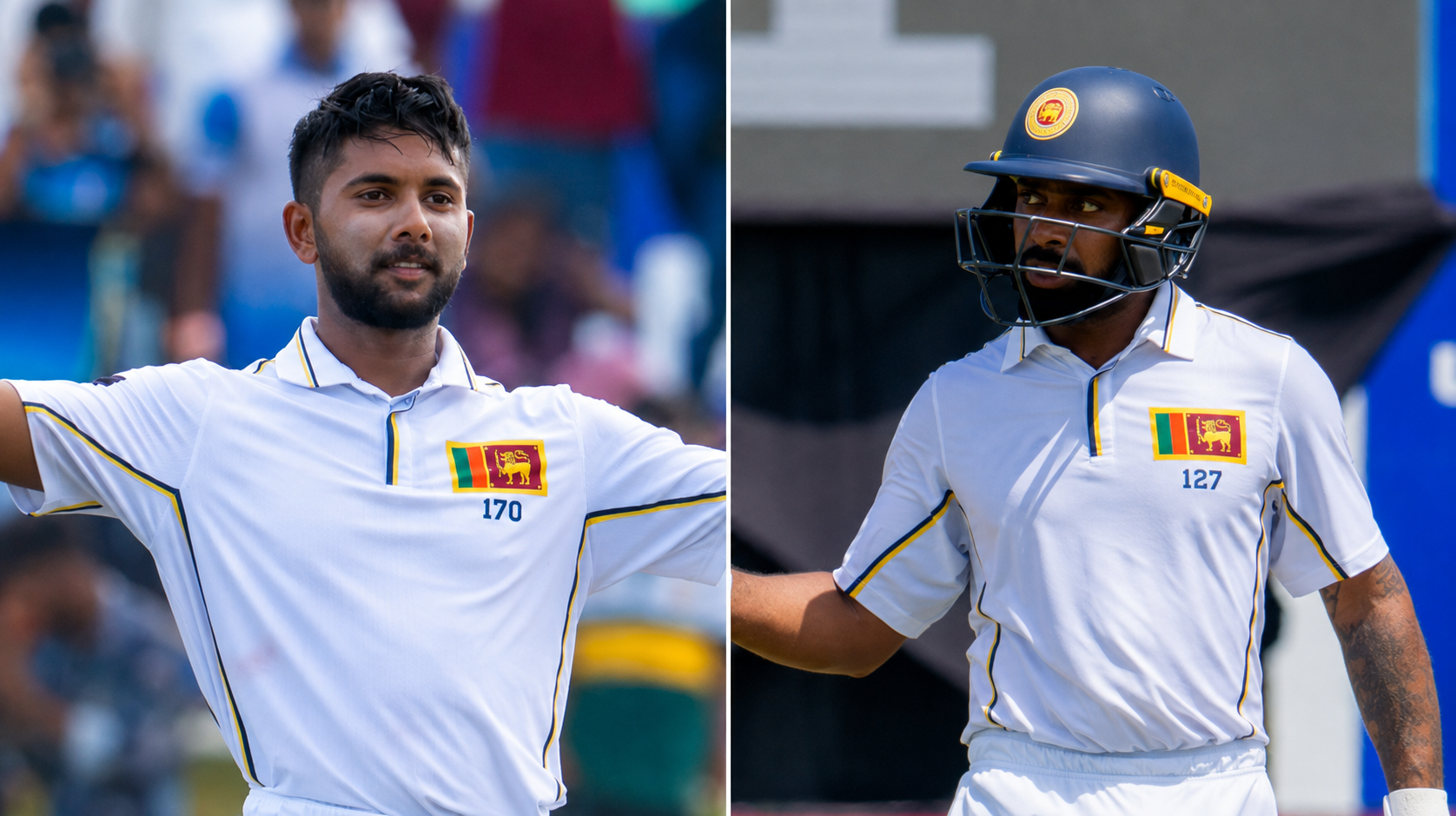
When Sri Lanka slumped to 90 for five in reply to India's imposing 462, the follow-on loomed large and an innings defeat felt a genuine possibility. What followed, however, was a partnership of grit and quality that dragged the hosts back from the brink. Sonal Dinusha and Niroshan Dickwella combined for a magnificent 146-run stand for the sixth wicket, one of the standout rescue acts in Sri Lanka's recent Test history against India.
Though India retained a commanding position, the alliance ensured Sri Lanka avoided the follow-on and remained, in the words of the centurion himself, "not yet out of the game."
Sri Lanka on the brink
The context made the partnership all the more valuable. Sri Lanka had endured a torrid morning session, losing half their side as India's bowlers, led by Mohammed Siraj and debutant-tour spinner Manav Suthar, tore through the top order.
Reduced to 90 for five, and 99 for five at lunch, the hosts were staring at the prospect of being asked to bat again immediately, still a long way from safety. The situation called for a substantial, disciplined partnership — and Dinusha and Dickwella delivered exactly that.
Taking the decision out of India's hands
The most significant achievement of the stand was the way it removed the follow-on threat entirely. As the older, softer ball became less dangerous, the pair grew in confidence and gradually wrested the initiative back from the Indian attack.
They batted through the entire extended afternoon session unbeaten, adding 116 runs without loss and frustrating India's bowlers on a surface offering assistance to the spinners. In doing so, they took the decision of whether to enforce the follow-on out of India's hands, a crucial psychological and tactical victory for the hosts.
Dinusha's maiden century
At the heart of the recovery was a career-defining innings from Sonal Dinusha. Playing just his fourth Test, the 25-year-old handled India's varied and potent spin attack with maturity and composure that belied his inexperience.
He brought up his maiden Test century from 167 balls, an innings featuring four fours and two sixes, including an audacious slog-sweep off Ravindra Jadeja from around the wicket. Reflecting afterwards, Dinusha called the milestone "very special," particularly given the pressure his side was under, and praised the quality of the Indian bowling he had scored against.
Dickwella justifies his recall
At the other end, Niroshan Dickwella provided the perfect foil with a fluent and valuable 80. Making his comeback after more than three years away from the Test side, and following a selection that had sparked debate in local cricketing circles, he justified his recall in style.
He reached his half-century from 67 balls, striking five fours and making regular, effective use of the sweep shot to counter the spinners. It was his 23rd Test half-century in 55 matches, and a timely reminder of his class after a lengthy absence from the format.
Riding their luck
Like many great rescue acts, the partnership was not entirely without fortune. Dickwella survived two India reviews during his innings, one of which was struck down on umpire's call, and was also dropped on 20 by KL Rahul at slip off the bowling of Suthar.
Those reprieves proved costly for India in the short term, allowing the stand to swell towards its eventual total of 146 from 216 balls and take Sri Lanka to relative safety. Such moments often prove the difference in tightly fought Test matches.
The end of the resistance
All good partnerships must come to an end, and this one was broken by a fine piece of bowling from Prasidh Krishna. Employing the wobble-seam delivery, he produced a beauty that seamed away and took Dickwella's edge through to wicketkeeper Rishabh Pant, ending the wicketkeeper-batter's innings for 80.
Dinusha continued his defiance to reach three figures, but was trapped lbw by Jadeja off the very next delivery, a decision that stood despite a review. His dismissal signalled the beginning of the end for Sri Lanka's innings, which folded for 284.
A partnership of substance
Even in a losing cause, the significance of the Dinusha-Dickwella stand cannot be overstated. Against a high-quality Indian attack, on a spin-friendly surface and in a pressure situation, the pair produced a partnership of genuine substance and character.
It was the kind of resilient, backs-to-the-wall effort that Sri Lanka will hope becomes a foundation for their younger players, with Dinusha in particular announcing himself as a batter capable of performing on the biggest stage against the toughest opposition.
The final word
Sonal Dinusha and Niroshan Dickwella's 146-run sixth-wicket stand was a defiant, high-quality partnership that rescued Sri Lanka from the depths of 90 for five and denied India the follow-on. While the tourists remained firmly in control with a 178-run lead, the alliance kept Sri Lanka in the contest and provided the standout storyline of the third day. For Dinusha, a maiden century; for Dickwella, a vindicating return — and for Sri Lanka, a glimmer of hope born from adversity.