Pant's 100-six landmark and Suthar's twin strikes leave Sri Lanka staring at an impossible chase
Rishabh Pant lit up Day 4 in Galle, becoming the first Indian — and the fastest ever — to hit 100 sixes in Tests during a maverick 66 that set Sri Lanka a daunting 372. Manav Suthar's twin strikes then reduced the hosts to 84 for 4 at stumps, still 288 adrift. With a record chase looming on a crumbling pitch, India need just six wickets on the final day to go 1-0 up.
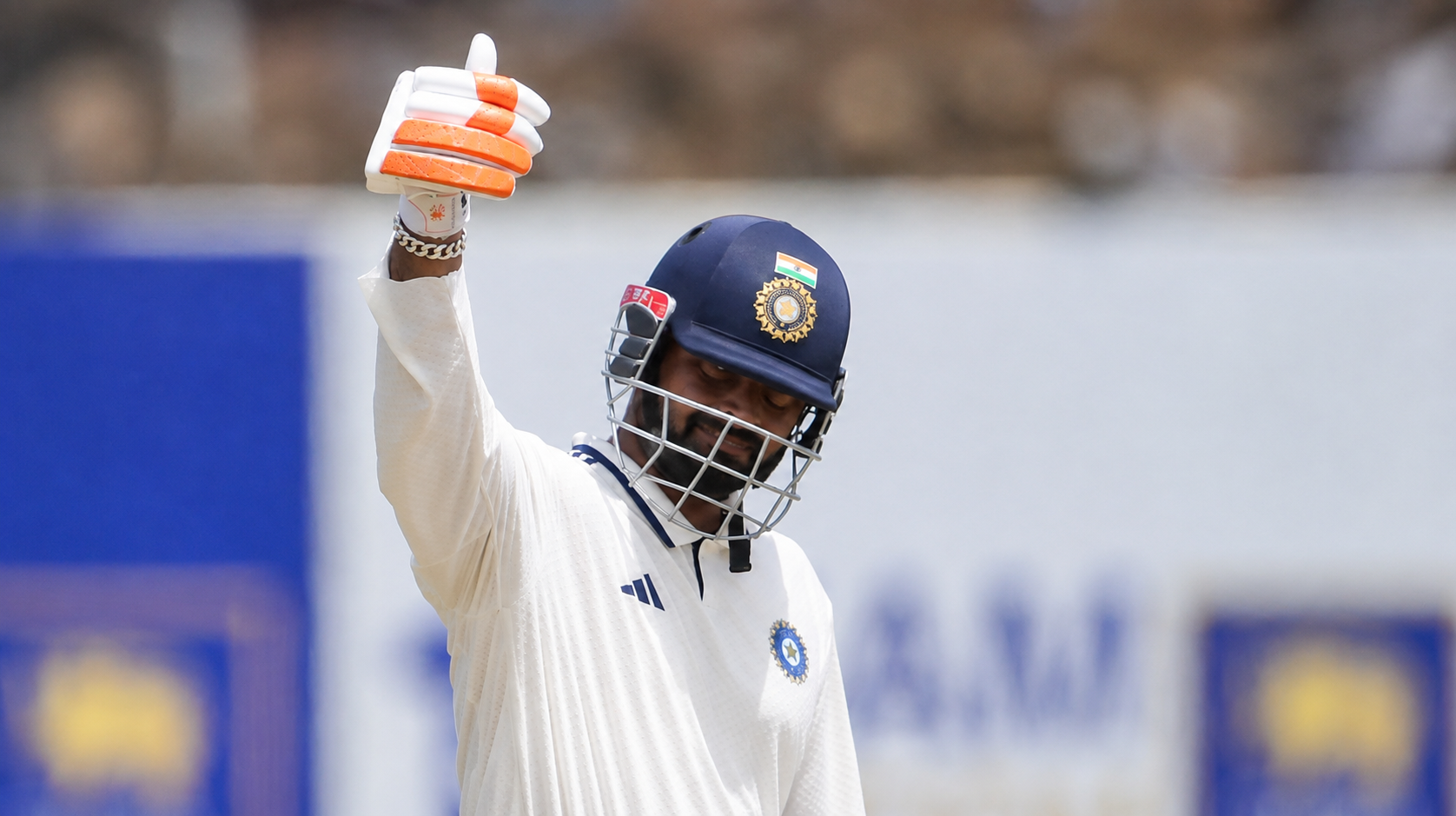
Rishabh Pant produced another maverick masterclass to tighten India's grip on the first Test against Sri Lanka in Galle, before Manav Suthar's twin strikes left the hosts staring at an improbable target. Pant's rapid 66, laced with a record-breaking landmark, powered India to 193 in their second innings, setting Sri Lanka a daunting 372 to win. By stumps on the fourth day, the hosts had slipped to 84 for four, needing a further 288 with India requiring just six wickets for victory.
On a pitch continuing its inevitable progression towards the brute it typically becomes late in a Galle Test, India find themselves needing only to complete the formalities on the final day.
Pant's historic landmark
The standout moment of the day belonged to Rishabh Pant, who etched his name into the record books during his counter-attacking innings. He became the first-ever Indian batter to hit 100 sixes in Test cricket, a testament to his fearless, attacking approach.
Remarkably, he also achieved the feat as the fastest player in history to reach the milestone, surpassing former Australian wicketkeeper Adam Gilchrist in terms of both innings and balls faced. Fittingly for a player who began his Test career with a second-ball six, the landmark underlined his status as one of the format's most destructive forces.
A maverick knock
Beyond the milestone, Pant's innings was crucial in the context of the match. His 66 from 69 balls provided the impetus India needed in a second innings where wickets were tumbling around him on a deteriorating surface.
As one report aptly put it, his maverick innings all but batted the hosts out of the Test. It transformed India's advantage from a strong one into a potentially insurmountable one, turning the 178-run first-innings lead into a target of 372 that carries enormous psychological weight.
India's second innings
Pant was not the only contributor, with the top order laying a useful platform before his acceleration. KL Rahul made 35 and the first-innings centurion Devdutt Padikkal chipped in with 44 as India were eventually bowled out for 193.
Sri Lanka's bowlers fought hard to keep their side in the contest, with Asitha Fernando the pick of the attack, claiming four wickets. Prabath Jayasuriya added three and Lahiru Kumara two, but Pant's late assault ensured India set a target well beyond the comfort zone of any chasing side at this venue.
The weight of history
The scale of Sri Lanka's task is best understood through the lens of Galle's history. The highest-ever successful run chase at the venue is 344, achieved by Pakistan in 2022, and a target of 200 or more has been surmounted only twice at the ground since 1998.
Set 372 on a surface offering sharp turn and increasingly uneven bounce, the hosts were always likely to be batting for survival rather than victory. That psychological burden appeared evident from the moment they began their innings after a brief rain delay.
Siraj strikes first
India's bowlers wasted no time in applying pressure. After the interruption, Mohammed Siraj drew first blood, hurrying opener Nishan Madushka into a mistimed pull that was comfortably taken in the deep by Prasidh Krishna.
It was the ideal start for the visitors, removing an opener cheaply and immediately reinforcing the sense of anxiety within the Sri Lankan camp. Siraj's early breakthrough set the tone for a relentlessly testing evening session for the hosts.
Suthar's twin strikes
The chief destroyer, however, was once again Manav Suthar. The left-arm spinner, enjoying a memorable maiden overseas Test, rattled the Sri Lankan top order with two crucial wickets to leave the hosts reeling.
His two scalps, finishing with figures of 2 for 30, were central to reducing Sri Lanka to a precarious position and eliminating any lingering hopes the hosts may have harboured of an unlikely chase. Prasidh Krishna also chipped in with a wicket as India's varied attack made telling inroads.
De Silva and Dinusha resist
Amid the carnage, captain Dhananjaya de Silva and first-innings centurion Sonal Dinusha offered some resistance to see their side through to the close. De Silva remained unbeaten on 31 and Dinusha on 25 at stumps.
Their vigil ensured Sri Lanka did not lose further wickets in the final overs, but with the pitch continuing to deteriorate and the target a distant 288 runs away, their fight looks more about pride and delaying the inevitable than genuinely threatening a result.
The final-day equation
India head into the final day as overwhelming favourites, needing six wickets to secure a commanding victory and a 1-0 lead in the two-match series. The key wicket will be that of de Silva, with his dismissal likely to open the floodgates.
The only realistic obstacle for India appears to be the weather, with rain having already disrupted proceedings across the Test. Any significant loss of time on the final day would aid Sri Lanka's survival hopes, but in normal conditions, India should have more than enough overs to force the result.
The final word
Day four belonged to India, and above all to Rishabh Pant, whose record-breaking, counter-attacking 66 shaped the contest and pushed the game firmly beyond Sri Lanka's reach. Backed by Manav Suthar's impressive twin strikes and a disciplined collective bowling effort, the tourists stand on the brink of a memorable win. Barring an intervention from the weather, India look set to draw first blood in the series and make a triumphant start to their new World Test Championship campaign.