India's repeated no-balls expose a worrying discipline issue in Colombo Test
India's spin attack has repeatedly crossed the line during the Colombo Test, prompting fresh questions over bowling discipline. The Indian spinners have bowled 15 no-balls on the Sri Lanka tour, while Ravindra Jadeja, Saransh Jain and Manav Suthar have all overstepped in the ongoing Test. Spin coach Sairaj Bahutule says the team is working to correct the problem.
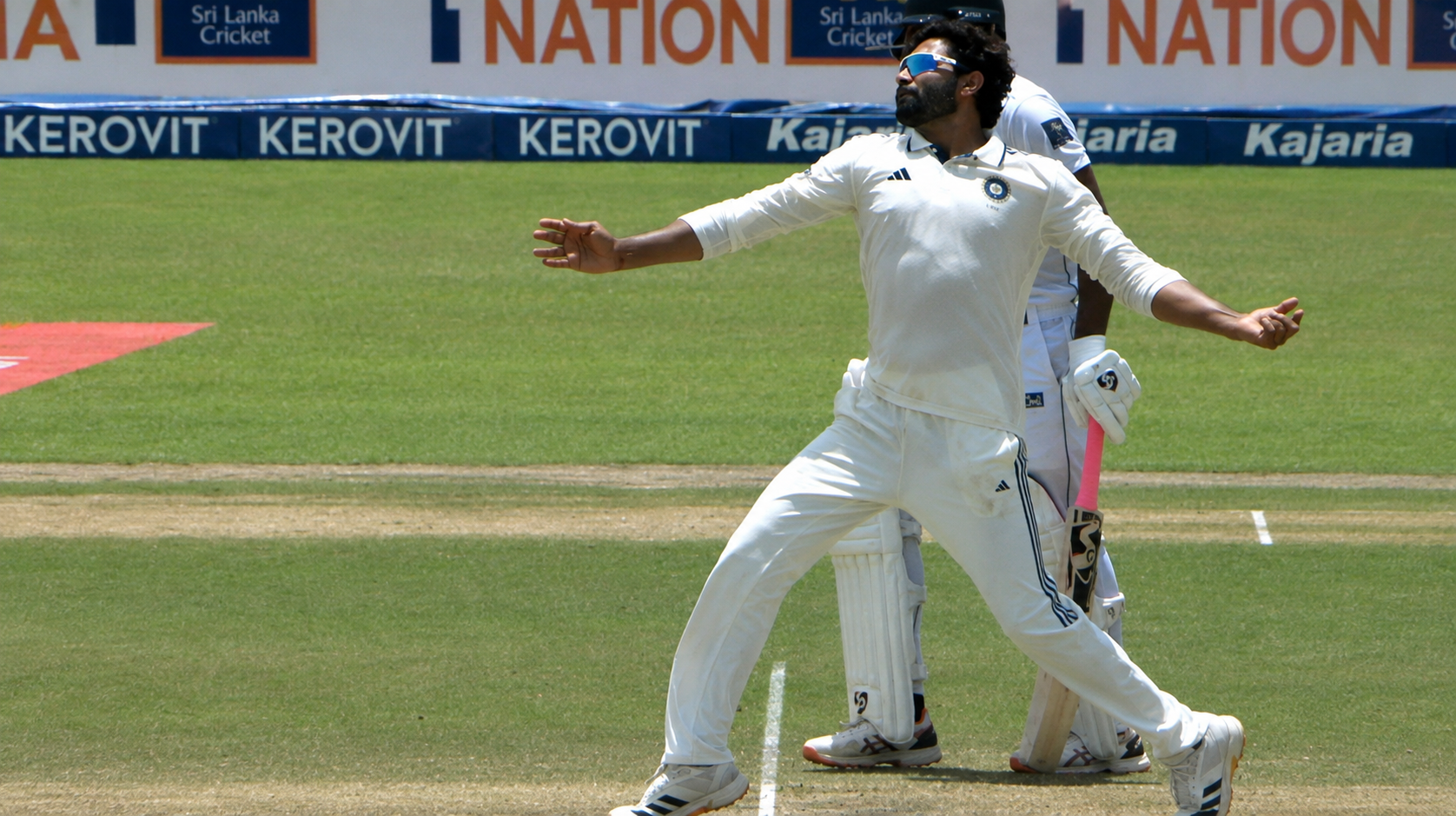
India's dominance with the ball in Sri Lanka has been accompanied by an unwanted problem that is becoming increasingly difficult to overlook. Their spinners have repeatedly overstepped during the ongoing Colombo Test, raising questions about basic bowling discipline at a time when the team is trying to close out the series with another strong performance.
India's spin attack has bowled 15 no-balls during the tour, compared with only five from Sri Lanka's spinners. The issue became particularly visible on the fourth day in Colombo, when India's spinners delivered five more illegal balls and took their match tally to 10.
A problem India cannot ignore
No-balls can appear to be small technical errors, but in Test cricket their consequences can be significant. An overstep gives the batting side an additional delivery and an extra run, while a wicket produced from the same delivery is immediately cancelled.
India avoided a major setback from their no-balls on the fourth day, but the frequency of the mistakes has become a concern. With Sri Lanka fighting to save the Test, giving away free runs and additional deliveries could have made India's task considerably harder.
The problem is especially notable because India's spinners are expected to be among the team's most reliable bowling options in subcontinental conditions.
Jadeja's numbers stand out
Ravindra Jadeja is at the centre of the wider discussion. Since the introduction of television umpire intervention for no-balls in Tests, Jadeja has recorded 89 oversteps, placing him among the highest no-ball counts in the format during that period.
Before TV umpires were given the responsibility of checking front-foot no-balls, Jadeja had bowled only 18 such deliveries since making his Test debut in 2012. His subsequent numbers therefore show a significant increase in overstepping.
Among spinners, his tally is particularly striking. He has bowled considerably more no-balls than Pakistan's Noman Ali, who is next among the leading spinners in this period.
The Colombo attack has added to the concern
This is not solely a Jadeja issue. India's current spin combination includes a debutant in Saransh Jain and Manav Suthar, who is still relatively new to Test cricket.
Jadeja, Jain and Suthar have collectively contributed to India's no-ball count during the current series. Jadeja has bowled eight no-balls, Jain six and Suthar one, with Suthar's error coming after he knocked the stumps during his delivery stride.
The figures highlight that India need greater consistency from the entire spin group rather than simply focusing on one bowler.
Bahutule admits the issue is being addressed
India's spin-bowling coach Sairaj Bahutule acknowledged that the coaching staff are aware of the problem and have been working with the bowlers to correct their take-off points.
According to Bahutule, the issue can sometimes occur when a bowler increases their effort while searching for a breakthrough. The additional push can cause the front foot to travel beyond the permitted line.
However, the coach made it clear that increased effort cannot be used as an excuse. India need to maintain the technical discipline required to bowl legal deliveries consistently.
Free-hit suggestion sparks discussion
Bahutule also offered an unusual suggestion when discussing the problem. He joked that introducing a free-hit after a no-ball in Test cricket could discourage bowlers from overstepping.
The free-hit rule is currently associated with limited-overs cricket and is not part of the traditional laws governing Test matches. Bahutule's comment was made more as a light-hearted way of explaining how an additional consequence might change a bowler's behaviour.
The underlying point, however, was serious: bowlers are unlikely to accept repeated no-balls if the mistake creates an even greater disadvantage for their team.
Jain's debut comes under scrutiny
Saransh Jain has also found himself involved in the discussion during his first Test appearance. The off-spinner has bowled several no-balls during the match, although he has also contributed with important wickets.
His performance demonstrates the balance India are currently trying to find with their spin attack. Jain is gaining valuable experience at international level, but the coaching staff will want him to develop reliable habits at the crease before the problem becomes a recurring feature.
The team will hope that the experience gained in Colombo helps him improve his accuracy and consistency in future Tests.
Net sessions are being monitored
Bahutule explained that the Indian coaching staff are already paying attention to no-balls during training sessions. Coaches monitor bowlers from the side and sometimes act as umpires during net practice to ensure the front-foot position is being checked.
That approach is designed to make legal delivery a natural part of the bowling action rather than something players consciously think about only during matches.
The coaching staff believe the issue can be corrected through repetition, monitoring and better awareness of the take-off point.
India's spin attack is in transition
The timing of the problem is significant because India's spin department is going through a period of transition. Jadeja remains the senior figure, but the bowlers around him are still developing their Test experience.
Jain is playing his first Test, while Suthar has only limited experience in the format. The combination will naturally require time to develop the consistency and understanding expected from a settled international attack.
That makes technical discipline even more important. India cannot afford to allow small errors to become established habits while the new spin combination is taking shape.
The cost of giving away extra deliveries
In a tight Test match, a no-ball can change an entire passage of play. A batter who should have been dismissed receives another opportunity, while the bowling side must complete an additional delivery.
Even when no wicket is lost from the mistake, repeated no-balls can disrupt an over and allow the batting side to escape pressure. Against a team fighting to survive, those small advantages can become important.
India's experience in Colombo is therefore a reminder that control is just as important as wicket-taking ability.
India need a cleaner finish
India have otherwise put themselves in a commanding position in the Colombo Test. Their first-innings declaration of 503 for 9 and Sri Lanka's struggles with the bat have given the visitors a significant advantage.
However, Sri Lanka's second-innings resistance has shown that India still need to finish the job. With the hosts fighting to extend their lead, India's bowlers cannot afford to give away unnecessary opportunities.
Reducing the no-ball count will be an important part of maintaining pressure during the final stages of the match.
A basic problem with a simple solution
There is no complicated tactical adjustment required to solve the issue. Bowlers need to establish reliable take-off points and repeat them under match pressure.
India's coaching staff are already working on that aspect, but the improvement must eventually appear in competitive matches rather than only during practice.
For a team with ambitions of competing consistently at the highest level of Test cricket, eliminating avoidable errors such as no-balls should be considered a basic requirement.
The bigger lesson for India
The Colombo Test has exposed an issue that India will need to address regardless of the final result. Their spinners have shown plenty of quality with the ball, but repeated overstepping has introduced an unnecessary weakness into an otherwise strong bowling unit.
Jadeja's long-term numbers and the current series figures show that this is not an isolated incident. The arrival of younger spinners makes it even more important for the team to establish correct habits now.
India's focus will remain on completing the Test successfully, but the no-ball problem deserves attention beyond this match. If the team can turn the current concern into a technical improvement, the experience in Colombo could ultimately help create a more disciplined and reliable spin attack for the future.