Afghanistan Face Must-Win Test Against India After Heavy Opening Defeat
Afghanistan have little time to recover after India overwhelmed them in the opening T20I in Delhi. The visitors collapsed to 43/5 before Azmatullah Omarzai and Mohammad Nabi revived the innings, but India chased 157 in only 13.4 overs. With Varun Chakaravarthy now ruled out through injury, Afghanistan will hope to exploit any weakness in India’s bowling combination and level the series.
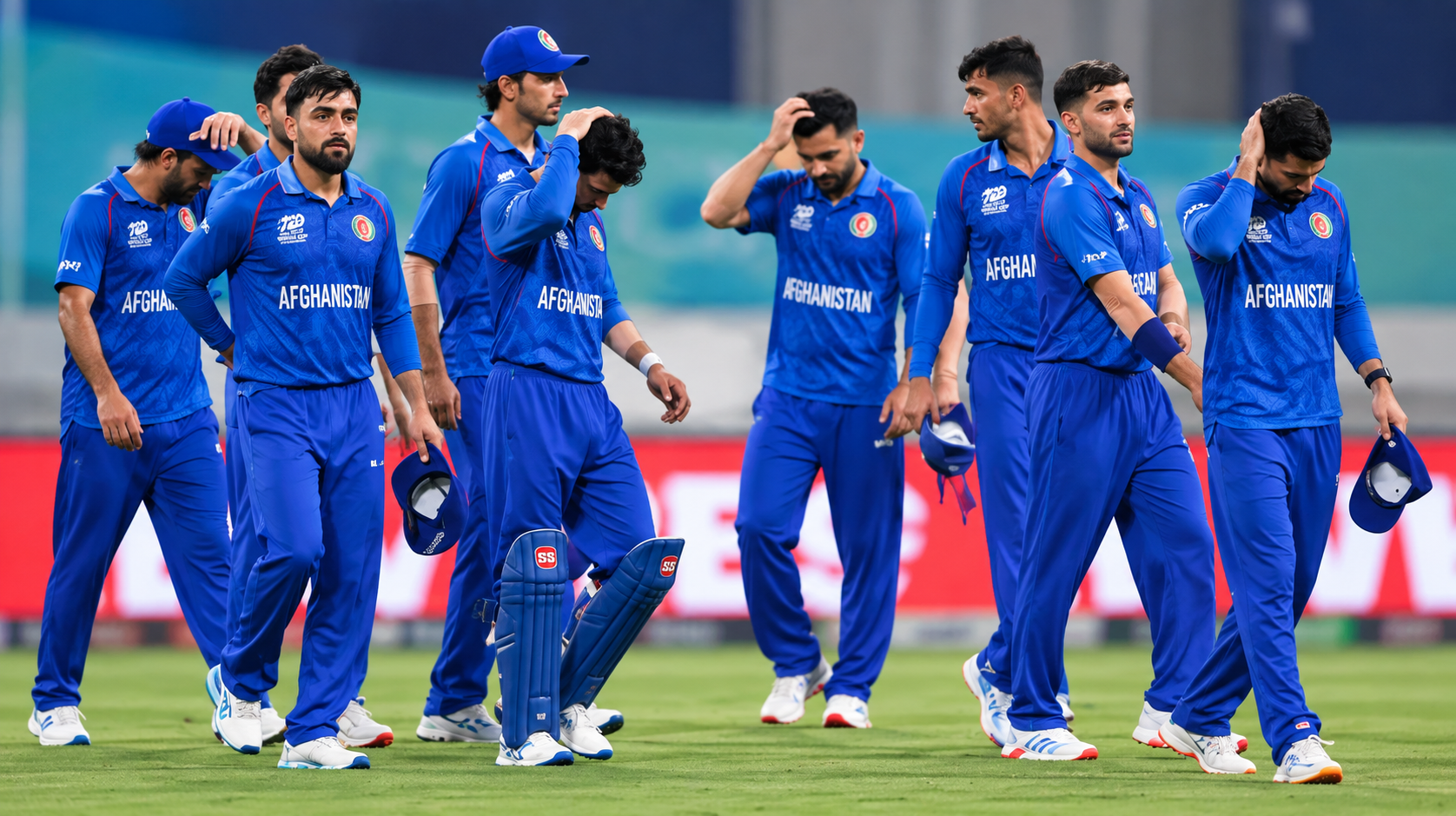
Afghanistan will be desperate for a rapid response when they face India in the second T20I in New Delhi. After being comfortably beaten in the series opener, Ibrahim Zadran's side have only a short window to correct their mistakes and keep the three-match series alive.
The first match exposed major problems for Afghanistan with both bat and ball. They lost five wickets for just 43 runs before Azmatullah Omarzai and Mohammad Nabi rescued the innings, while India's chase was dominated by Abhishek Sharma's explosive 82.
Afghanistan Need a Complete Response
The defeat was one-sided for most of the contest. Afghanistan's top order struggled against India's frontline attack before Omarzai produced a counter-attacking innings that gave the visitors something to defend.
For the second game, the Afghan team will need contributions from more than one or two players if they are to challenge an India side packed with experienced international performers.
The Top Order Must Improve
Afghanistan's biggest concern from the opening match was their start with the bat. Rahmanullah Gurbaz was dismissed for a duck in the first over, while the rest of the top order failed to build a substantial partnership.
India's bowlers repeatedly found breakthroughs and reduced Afghanistan to 43/5 inside seven overs. Such a start leaves very little margin for error against a team capable of scoring at an extraordinary rate.
Omarzai Provides the Blueprint
Azmatullah Omarzai showed exactly what Afghanistan needed during the recovery. He attacked the Indian all-rounders and took calculated risks instead of allowing the required run rate to overwhelm him.
His unbeaten 64 from 44 balls, together with Mohammad Nabi's 33, helped Afghanistan reach 156/8 after their early collapse. The pair added 83 runs and gave their bowlers at least a competitive total to work with.
Nabi's Experience Remains Important
Mohammad Nabi once again demonstrated why his experience remains valuable to Afghanistan's T20 setup. He supported Omarzai during the difficult phase and helped turn a potential 120-run innings into a total above 150.
However, Afghanistan will need Nabi's contribution to come later in the innings rather than relying on him to repair another top-order collapse.
India's Chase Was Ruthless
Any hope Afghanistan had of defending 156 disappeared quickly once India's openers began their response. Abhishek Sharma attacked from the outset and turned the chase into a one-sided contest.
He smashed 82 from only 32 balls, striking seven fours and seven sixes. Ishan Kishan then added 42 as the pair combined for a 121-run partnership.
Abhishek Has Rediscovered His Rhythm
Abhishek's performance was particularly important because he had entered the series after a period of relatively modest returns. Rather than changing his natural attacking approach, he went after Afghanistan's bowlers immediately.
The left-hander's performance also reinforced India's aggressive batting philosophy. Abhishek has indicated that India want to continue playing with an attacking mindset regardless of occasional failures.
Rashid Khan Faces Another Challenge
Afghanistan's biggest individual challenge could once again involve Rashid Khan. The world's premier T20 leg-spinner was unable to contain Abhishek in the opening game.
Abhishek scored 19 runs from the seven deliveries he faced against Rashid, demonstrating how aggressively India are prepared to attack even Afghanistan's most dangerous bowler.
Afghanistan Need Better Plans Against India's Top Order
Afghanistan cannot afford to simply rely on Rashid and Noor Ahmad to control the middle overs. India's batting order has enough depth to attack multiple bowling options.
The visitors will need better powerplay execution, tighter lines and greater discipline if they want to prevent India from establishing another early advantage.
Varun's Absence Changes India's Combination
India will enter the second T20I without Varun Chakaravarthy. The spinner developed a side strain after the opening match and has been released from the series for further assessment at the BCCI Centre of Excellence.
His absence could give Afghanistan a small tactical opportunity. Varun had bowled four economical overs for just 16 runs in the first game, so India must now find another way to control the middle overs.
Ravi Bishnoi Could Come In
Ravi Bishnoi is the most obvious candidate to replace Varun in India's XI. The leg-spinner would provide another attacking spin option while allowing India to retain a specialist bowler in the middle overs.
Afghanistan will be hoping that the change gives their batters an opportunity to regain some control of the game.
India Still Have a Powerful Pace Attack
Even without Varun, India possess a formidable pace combination. Jasprit Bumrah returned to T20I cricket with a controlled spell of 1/26, while Arshdeep Singh was the standout bowler with 3/19.
That combination will continue to pose a major challenge for Afghanistan's top order, particularly if India again strike early with the new ball.
Afghanistan's Lack of Recent T20I Cricket
Another factor working against Afghanistan is their lack of recent international T20I cricket. The team had not played a T20I for seven months before arriving in Delhi.
Although several players have remained active in franchise cricket, international cricket requires a different level of coordination and familiarity. Their slow start against India exposed some of those issues.
Captain Ibrahim Wants a Better Start
Ibrahim Zadran will be looking for a much stronger contribution from himself and his top-order partners. His team cannot afford another innings where the first five wickets disappear before the middle overs.
A solid opening partnership would give Afghanistan's experienced middle order the platform needed to attack India's bowlers later in the innings.
Afghanistan Could Add Another Seamer
The visitors may consider changing their bowling combination for the must-win contest. An additional pace option could help them attack India's top order with the new ball.
Naveen-ul-Haq is one possible option, although Afghanistan must decide whether the extra seamer offers greater value than maintaining their spin-heavy combination.
The Fifth-Bowler Problem for India
Despite India's dominance, the opening game did reveal one potential weakness. Their fifth-bowling option conceded 59 runs from four overs, with Nitish Kumar Reddy, Abhishek Sharma and Shivam Dube sharing the workload.
Afghanistan took advantage of that period late in their innings. If they can preserve wickets until that stage again, they may be able to put greater pressure on India's bowling balance.
Delhi Conditions Could Play a Role
The second match will again be played at the Arun Jaitley Stadium. The centre pitch is expected to provide more even boundary dimensions compared with the opening contest.
There is also a possibility of a passing afternoon shower, although the forecast does not currently suggest a major threat to the evening fixture.
India Start as Clear Favourites
India will enter the match with considerable confidence after their seven-wicket victory. Their batting reached the target with 38 balls remaining, while their bowlers controlled most of Afghanistan's innings.
The absence of Varun gives Afghanistan a potential opening, but India still have enough quality to remain strong favourites.
Afghanistan Need One Complete Performance
The visitors do not necessarily need dramatic changes. They need better execution across all phases: a stable powerplay, a strong middle-order partnership, disciplined bowling and improved fielding.
The first game showed that Afghanistan have players capable of competing with India. The problem was that too few of them performed at the required level simultaneously.
Series Could Be Decided in Delhi
If India win the second T20I, they will take an unassailable 2-0 lead. Afghanistan therefore have no room for another poor performance.
A victory, on the other hand, would level the series and create a deciding third match in Delhi on September 17.
A Chance to Change the Narrative
Afghanistan's first match was a reminder of how quickly a strong Indian team can take control. But T20 cricket also allows a side to respond immediately, and Afghanistan have enough match-winners to produce a very different performance.
Omarzai's innings showed the quality available in their middle order, while Rashid, Nabi, Noor and Farooqi remain capable of changing a game.
Afghanistan's Biggest Test Yet
The second T20I is therefore more than another match in the series for Ibrahim Zadran's team. It is an opportunity to demonstrate that the opening defeat was an off day rather than an accurate reflection of their capabilities.
India have already established control, but Afghanistan still have one clear route back: improve their start, survive India's new-ball attack and make their experienced players count.
Can Afghanistan Force a Decider?
The answer will depend largely on whether Afghanistan can avoid another early collapse. India have shown they can punish even a respectable total, so the visitors will need to produce a significantly stronger batting performance.
With Varun Chakaravarthy unavailable, Afghanistan have been handed one potential advantage. Whether they can actually exploit it will determine whether the series remains alive heading into the final T20I.