Nathan Ellis and Joel Davies Ruled Out as Australia Face More Injury Trouble
Australia have suffered another double injury blow ahead of the third ODI against South Africa, with Nathan Ellis and Joel Davies ruled out. Ellis sustained a left side strain after bowling four overs in Johannesburg, while Davies picked up a right hamstring injury while fielding as a substitute. Australia already trail the three-match series 0-2.
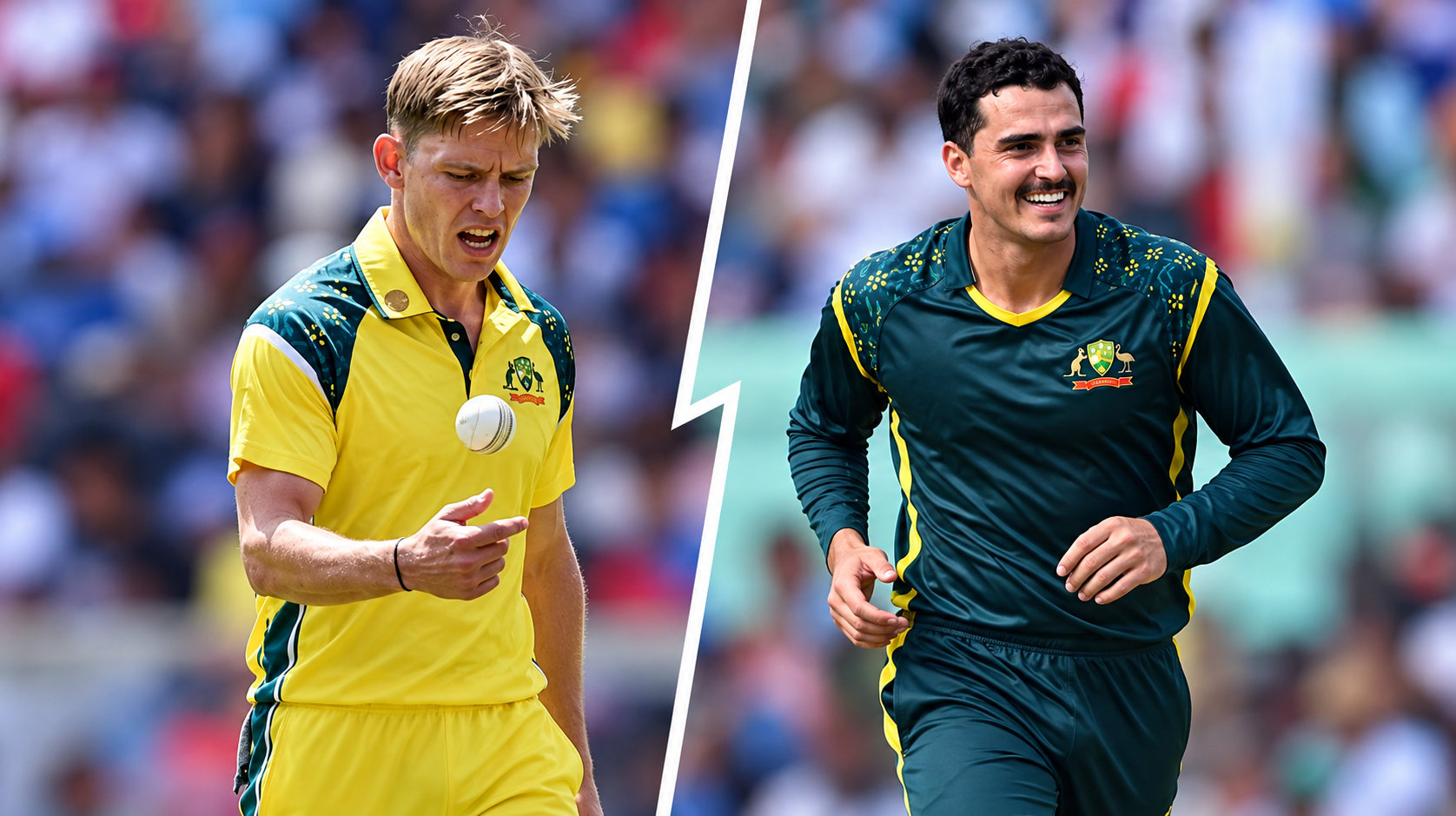
Australia's injury problems have continued during their South Africa tour, with Nathan Ellis and Joel Davies ruled out of the third and final ODI at Potchefstroom on September 30.
Ellis suffered a left side strain during the second ODI at the Wanderers in Johannesburg, while Davies sustained a right hamstring injury while serving as a substitute fielder during the same match. Their withdrawals further reduce Australia's available options for the series finale.
Nathan Ellis Suffers Side Strain
Ellis was unable to complete his bowling workload in the second ODI after delivering only four overs. The fast bowler left the field after experiencing discomfort and did not return to finish his spell.
His injury is another setback for an Australian pace attack that has already lost Billy Stanlake during the African tour. Ellis had been an important part of Australia's bowling plans and had impressed during the team's recent ODI campaign in Zimbabwe and South Africa.
Ellis will return to Australia for further assessment and rehabilitation. The immediate focus will be on his recovery, with the possibility of returning for Australia's home ODI series against England in November.
Joel Davies Also Leaves the Tour
Davies sustained a hamstring strain while fielding as a substitute in Johannesburg. The left-arm spinner had travelled with the Australian squad as an additional spin option but had not yet made his international debut.
Following the injury, Davies is set to return home for rehabilitation before resuming his domestic commitments with New South Wales.
Australia's Injury List Continues to Grow
The latest injuries add to an increasingly difficult tour for Australia. Josh Inglis was previously ruled out after suffering a broken finger during the opening ODI in Durban, while Billy Stanlake also returned home after suffering a side strain during the Zimbabwe series.
Cameron Green has also been managing a shoulder issue during the South Africa ODIs and has not bowled in the series. The growing list of fitness concerns has forced Australia to rely on a number of less experienced players.
Jack Edwards Under Monitoring
Australia also have another fitness concern involving all-rounder Jack Edwards. Edwards claimed his maiden international five-wicket haul in the second ODI but is being monitored for a hamstring issue.
He travelled with the Australian squad to Potchefstroom ahead of the final ODI, meaning the team management will assess his condition before confirming the playing XI.
South Africa Take Unassailable Series Lead
South Africa have already secured the three-match ODI series after winning both games. The hosts won the opening match in Durban by 67 runs before producing another strong performance in Johannesburg to claim the second ODI by 32 runs.
In the second match, South Africa posted 365/9, powered by centuries from Temba Bavuma and David Miller. Australia were eventually bowled out for 333, despite a strong chase that kept the contest alive deep into the innings.
Changes Expected for the Final ODI
With Ellis unavailable, Australia may bring experienced fast bowlers Pat Cummins and Mitchell Starc back into the playing XI. Cummins did not feature in the first two matches, while Starc was rested for the second ODI.
Josh Hazlewood has played both matches and could also be managed depending on Australia's final combination. Xavier Bartlett is another option available to the visitors.
Final ODI Set for Potchefstroom
The third ODI will be played at JB Marks Oval in Potchefstroom on September 30. South Africa will enter the match having already secured the series, while Australia will be looking to avoid a clean sweep.
For Australia, the final match will also provide another opportunity to assess players and combinations ahead of the longer-format assignment against South Africa and the wider preparation for the 2027 ODI World Cup.