West Indies Seek a New T20 Era as Talent, Funding and Development Challenges Grow
WI remain one of T20 cricket's most naturally gifted teams, but rebuilding their former dominance will require more than individual brilliance. Financial pressure, player availability, gaps in domestic development and inconsistent bowling have complicated their progress. Their competitive series against India offers hope, but building a stronger talent pipeline is essential for sustained success.
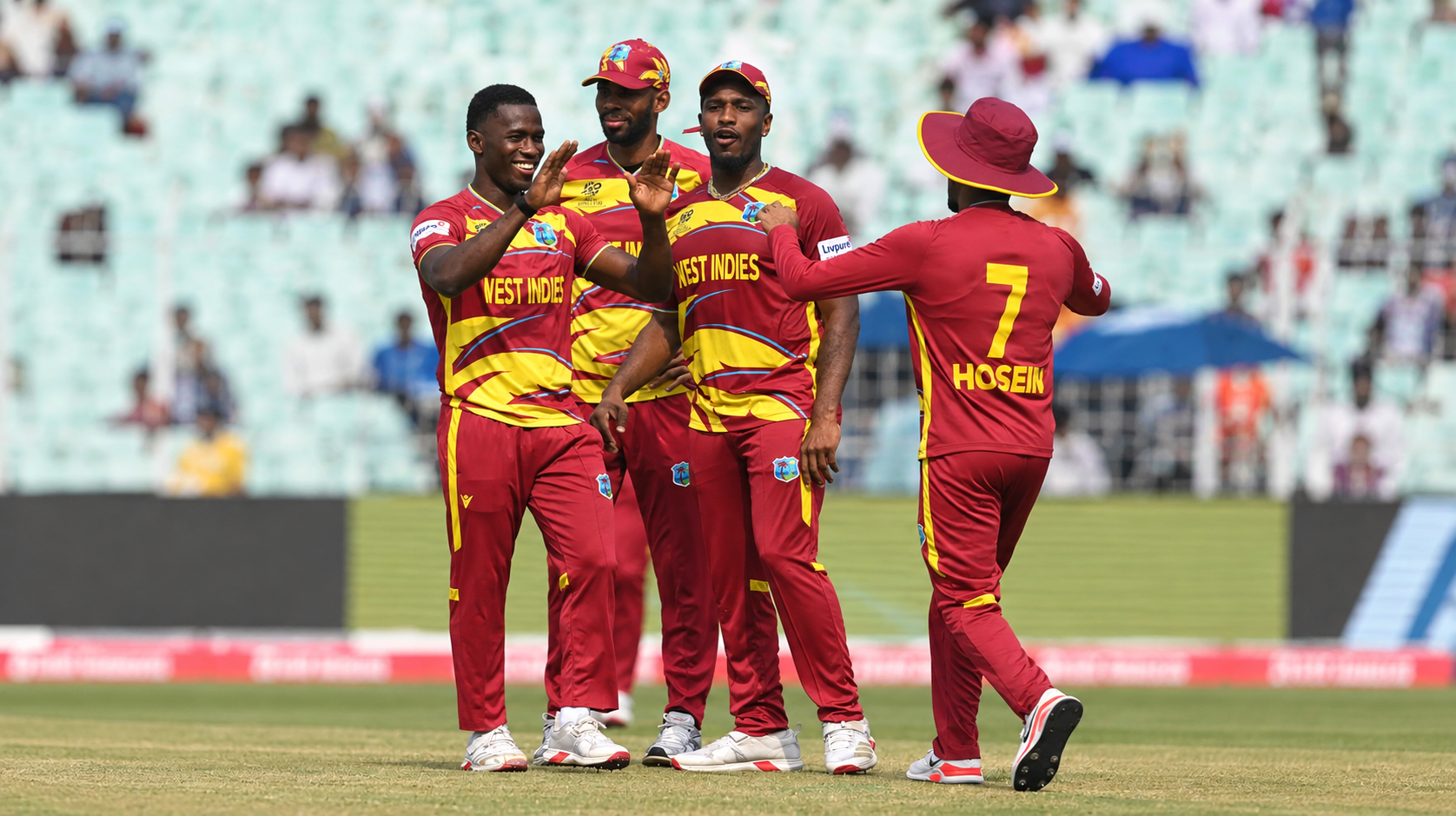
West Indies have long been associated with explosive batting, fearless cricket and unforgettable performances on the global stage. Their men's team won the ICC Men's T20 World Cup in 2012 and 2016, establishing the Caribbean as one of the format's great powers. A decade after their second title, however, the team faces a difficult question: can West Indies build another generation capable of competing consistently for major trophies?
The current challenge extends beyond results on the field. Financial pressures, player availability, a limited development pathway and the changing demands of modern T20 cricket have all affected the team's progress. Their ongoing series against India has demonstrated that the talent remains, but turning individual performances into sustained success will require a broader rebuilding effort.
Moving Beyond the Golden Generation
The West Indies sides that won the 2012 and 2016 T20 World Cups featured influential players such as Chris Gayle, Dwayne Bravo, Andre Russell, Kieron Pollard, Sunil Narine and Daren Sammy. Their combination of power-hitting, tactical awareness and experience helped establish a distinctive Caribbean identity in the shortest format.
That generation has gradually moved away from international cricket, leaving the next group to take responsibility. Players such as Nicholas Pooran, Shimron Hetmyer, Rovman Powell, Jason Holder and Akeal Hosein have carried forward parts of that legacy, but rebuilding a successful team requires depth across every department, not just a few match-winners.
Former West Indies batter Daren Ganga views the transition as the end of one cycle and the beginning of another. The central task is to create a reliable pathway through which emerging players can develop the skills, experience and consistency needed at international level.
Financial Pressure and Player Availability
One of the biggest obstacles is the financial situation surrounding cricket in the Caribbean. Cricket West Indies has faced pressure to manage costs, including reported reductions in player retainers and changes to domestic contracts. Funding domestic tournaments, maintaining facilities and moving players across a region made up of separate islands and countries can be expensive.
These constraints affect more than administration. They influence the number of opportunities available to young cricketers, the quality of coaching they receive and the depth of the pool from which selectors can choose. When established players are unavailable, a team with limited backup options can struggle to maintain its preferred balance.
The growth of global franchise cricket has added another complication. Overseas leagues offer players attractive financial opportunities and different career options. Nicholas Pooran's decision to step away from international cricket to focus on franchise opportunities illustrates the challenge of keeping leading talent available for the national team.
West Indies therefore need a system that makes international cricket and domestic development sustainable while recognising the realities of the modern professional game.
The Caribbean Premier League's Important Role
The Caribbean Premier League remains central to the region's T20 ecosystem. It gives local players a platform to perform, brings international professionals into the competition and connects cricket with supporters across the Caribbean.
However, the pathway beneath the CPL remains a concern. Unlike countries with established domestic T20 competitions feeding directly into major professional leagues, the Caribbean lacks a consistently operating regional feeder competition that bridges territorial cricket and the CPL.
The West Indies Breakout League was intended to help address this gap by connecting domestic teams, CPL franchises and the senior national setup. Financial difficulties prevented the competition from taking place in 2026, leaving an important development opportunity unrealised.
A stronger pathway would allow promising players to gain regular exposure to higher-quality competition before being promoted to the international side. It could also help selectors identify players suited to specific roles rather than relying on short-term performances or raw potential alone.
Modern T20 Demands More Than Six-Hitting
Power-hitting remains one of West Indies' biggest strengths, but the modern game demands a broader set of skills. Batters must be able to rotate strike, score against defensive fields, attack different bowling styles and maintain a high scoring rate even when boundaries are difficult to find.
Conditions in the CPL can differ considerably from those encountered in other major leagues and international tournaments. Cricbuzz's analysis highlighted that median first-innings totals in the CPL have been lower than those in competitions such as the IPL and Pakistan Super League since 2023. That difference does not make Caribbean conditions inferior, but it underlines the importance of preparing players for a wider variety of surfaces and scoring environments.
West Indies need batters who can adapt when the pitch does not favour aggressive stroke play. Young players should be encouraged to develop game awareness, strike rotation and the ability to build an innings, alongside their natural attacking instincts.
The same principle applies to bowling. Modern T20 attacks need multiple variations, reliable yorkers, effective slower balls and the ability to defend totals on flat pitches. Developing these skills requires specialist coaching, match experience and consistent performance standards.
The Powerplay Problem
The opening overs have become a defining phase of T20 cricket. Leading teams increasingly use the Powerplay to establish a scoring rate that allows the middle order to continue attacking without being forced into excessive risk later in the innings.
West Indies have struggled to produce consistently strong opening partnerships. Their top-order statistics in recent T20 internationals and CPL seasons have pointed to a need for greater reliability from locally developed openers.
When early wickets fall, the middle order is forced to rebuild instead of maintaining pressure on the opposition. That can limit the contribution of explosive finishers and leave the team short of runs even when its lower order possesses considerable hitting power.
Shai Hope has highlighted the importance of building a foundation at the top of the innings. A stable opening partnership would allow the middle order to attack with more freedom and reduce the pressure on individual players to rescue difficult situations.
Improving the Bowling Attack
Bowling has been another area requiring attention. Recent T20I numbers have exposed West Indies' difficulties with economy rates and bowling averages, particularly during the middle overs. Although the attack has shown improvements at points in the India series, maintaining control throughout an innings remains a major challenge.
The availability of specialist spin options is especially important. Finger-spinners can be effective on surfaces that offer grip, but teams also need wrist-spin and other attacking options to challenge batters on flatter pitches. Without a broad range of skills, bowlers can become predictable when opponents target them.
Access to specialist coaches and high-quality training environments could help address these weaknesses. Young bowlers need opportunities to practise defensive plans, develop variations and learn how to respond when batters attack aggressively.
Improvement will take time, but a stronger domestic structure can give the national side more options and reduce its dependence on a small group of experienced performers.
The India Series Offers Encouragement
West Indies' performances against India have provided reasons for optimism. The Caribbean side has shown that it can compete with a strong opponent, using aggressive batting and timely bowling performances to keep the series competitive.
Shai Hope has been particularly influential, demonstrating his ability to anchor an innings while maintaining an attacking approach. The wider team, however, needs more players to produce consistent contributions so that a single quiet performance from Hope does not undermine the entire batting effort.
The series has also highlighted the difference between having match-winning individuals and having a consistently effective team. West Indies possess the power to challenge the best sides, but their next step is to combine that power with stronger partnerships, greater tactical flexibility and more dependable bowling.
Building the Next Generation
Young prospects such as Ackeem Auguste, Jewel Andrew, Jakeem Pollard and Vitel Lawes have been identified as players who could contribute to the next phase of West Indies cricket. Their progress will depend on receiving enough high-quality opportunities, appropriate coaching and clear roles within the development system.
Rather than expecting every batter to imitate the biggest hitters of previous generations, selectors and coaches must identify each player's strengths and build a balanced team around them. A technically sound opener, a reliable middle-order batter, a versatile all-rounder and a specialist death bowler can all be valuable, even if they do not attract the same attention as a six-hitting star.
The Caribbean also needs to invest in facilities, pitch preparation and coaching standards. More consistent playing conditions would help players develop skills that transfer to different international venues, while better access to specialist training could accelerate the development of both batters and bowlers.
Can West Indies Return to the Top?
West Indies have the raw talent and T20 tradition to challenge for another World Cup title. Their two championships remain proof of what the team can achieve when its players combine individual brilliance with collective purpose.
But history alone cannot guarantee a return to the top. The next successful cycle will depend on sustainable funding, a stronger domestic pathway, improved player availability and a commitment to developing skills suited to modern T20 cricket.
The competitive showing against India is an encouraging sign, not a complete solution. If West Indies can turn their current flashes of brilliance into consistent performances across batting, bowling and fielding, they can begin building a team capable of competing for major honours again. The challenge is to make this period a foundation for long-term progress rather than another short-lived revival.