Mulder and Rabada Break Australia's Resistance as South Africa Level Test Series
South Africa defeated Australia by an innings and 31 runs in Gqeberha to level the three-Test series at 1-1. Travis Head scored 121 and Scott Boland battled for 40, but Wiaan Mulder claimed three wickets and Kagiso Rabada took four to finish Australia's resistance. The result sets up a decisive third Test in Cape Town.
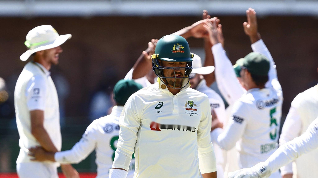
South Africa produced a remarkable comeback to defeat Australia by an innings and 31 runs in the second Test at St George's Park in Gqeberha on October 22, levelling the three-match series at 1-1. Despite losing nearly two days to rain, the hosts seized control after Temba Bavuma's outstanding 179 and a devastating first-innings collapse from Australia.
Australia were dismissed for just 99 in their first innings and forced to follow on. Travis Head's determined century and Scott Boland's stubborn resistance briefly threatened to delay South Africa's victory, but Wiaan Mulder and Kagiso Rabada broke through during the final day's play. Marco Jansen then completed the win by removing Josh Hazlewood.
Bavuma's 179 Turns the Match Around
South Africa's position had looked precarious early in their first innings. The hosts were reduced to 110/6, leaving Australia in a strong position to take advantage of the conditions and secure another victory after winning the opening Test in Durban.
Captain Temba Bavuma responded with one of the most important innings of his Test career. He displayed remarkable patience, batting for more than nine hours to score 179 and rebuild the innings when South Africa desperately needed stability.
Bavuma found a crucial partner in Simon Harmer, who contributed 82. Their eighth-wicket partnership produced 183 runs, changing the course of the match and lifting South Africa to 425/9 declared.
The stand was particularly significant because it came after Australia had taken control with early wickets. Instead of allowing the innings to collapse, Bavuma and Harmer forced the visitors to spend long hours in the field and created the foundation for South Africa's eventual victory.
Jansen Dismantles Australia for 99
South Africa carried their momentum into Australia's first innings. Marco Jansen led the attack with a superb spell of five wickets for 33 runs, exploiting bounce and movement to make scoring difficult.
Australia struggled to build partnerships and were dismissed for 99 in 42.3 overs. The collapse gave South Africa a first-innings lead of 326 runs, leaving the visitors facing an uphill battle to save the match.
Jansen's spell was decisive because it transformed South Africa's advantage from a substantial lead into a position from which an innings victory became a realistic possibility. With Australia well behind, Bavuma enforced the follow-on and sent the visitors back to bat immediately.
Head Leads Australia's Fightback
Australia began their second innings needing to bat for an extended period simply to make South Africa work for the victory. Early wickets increased the pressure, but Travis Head and Marnus Labuschagne combined to offer resistance.
Head gradually took control, mixing aggressive strokes with careful defence as he moved towards his century. Labuschagne supported him with 39, and their partnership of 92 gave Australia a chance to extend the match into the final day.
Head eventually reached 121 from 190 deliveries, striking 15 boundaries. It was his 13th Test century and only his second overseas hundred, making it a particularly important personal milestone.
However, Mulder ended Head's innings when the batter attempted to attack a rising delivery and chopped the ball onto his stumps. The breakthrough was crucial for South Africa, as Head had been Australia's most reliable batter during the second innings.
Boland's Resistance Delays the Inevitable
Scott Boland became an unexpected obstacle in South Africa's pursuit of victory. Initially sent in as a nightwatchman, he remained at the crease far longer than a typical lower-order batter, occupying it for 166 deliveries and scoring 40 runs.
Boland's innings was built on patience and a willingness to defend for long periods. He repeatedly resisted South Africa's attempts to create a breakthrough, while also finding occasional opportunities to score against deliveries that strayed from their intended line.
His partnership with Head had already helped Australia reach 156/4 by the end of Day 4. On the final morning, Boland continued to frustrate the hosts alongside Alex Carey, helping Australia carry their fight into the final session.
But Mulder eventually found the breakthrough, sending a delivery through Boland's defence to hit the stumps. The dismissal ended one of the most determined lower-order rearguards of the match and opened the door for South Africa to finish the job.
Rabada's Return Makes the Difference
Kagiso Rabada played a vital role in the closing stages, taking four wickets for 77 runs in Australia's second innings. Returning after an injury layoff, the fast bowler provided the pace and accuracy South Africa needed when the match was reaching its decisive phase.
Rabada removed Mitchell Starc with a full delivery that breached his defence, leaving Australia with only one wicket remaining. His ability to produce a breakthrough immediately after being brought back into the attack gave South Africa a timely advantage.
Steve Smith had also fallen to Rabada after a top-edged pull shot was caught by Matthew Breetzke. Smith, who had been managing a neck issue, came in at No. 7 and managed only three runs in the second innings.
Mulder finished with three wickets for 64 runs, while Rabada's four-wicket haul helped dismantle Australia's lower order. Jansen then completed the match by having Hazlewood caught in the slips, sparking celebrations among the South African players.
Rain Could Not Prevent a Result
The Test had appeared to be heading towards a draw after heavy rain interrupted the opening two days. Only limited play was possible early in the match, and further rain delayed the start of the final day's action.
South Africa, however, made the most of the time available. Bavuma's monumental innings, Jansen's five-wicket haul and the sustained pressure from the bowling attack allowed the hosts to overcome the weather interruptions and force a result.
The victory was also notable because it marked the first time since 1970 that South Africa had beaten Australia after enforcing the follow-on. It was only the fourth innings victory South Africa had recorded against Australia in Test cricket.
Series Level at 1-1
South Africa's win brings the three-match series level at one victory apiece. Australia had won the opening Test in Durban by 214 runs, but the hosts responded in Gqeberha with a performance that showcased their resilience after a difficult start.
The result also provides South Africa with valuable points in the 2025–27 World Test Championship cycle. Their victory strengthens their position in the standings, while Australia remain in contention despite missing an opportunity to secure the series early.
Cape Town Set for a Decisive Test
The teams now turn their attention to the third and final Test at Newlands in Cape Town, scheduled to begin on October 27. With the series level, the final match will decide which side finishes the tour with the Test series trophy.
South Africa will take confidence from their comeback in Gqeberha, particularly the performances of Bavuma, Jansen, Mulder and Rabada. Australia, meanwhile, will need a more reliable batting performance after their first-innings collapse and will look to build on Head's century and Boland's resistance.
The second Test demonstrated how quickly the balance of a match can shift. South Africa recovered from 110/6 to post 425/9 declared, then used their bowling attack to dismiss Australia twice. With one match remaining, both teams have everything to play for in Cape Town.