Pat Cummins' Bold Decision at Newlands Raises Questions as South Africa Dominate Early
Australia captain Pat Cummins chose to field after winning the toss in the decisive Cape Town Test, breaking with the usual preference to bat first at Newlands. South Africa made a flying start through Aiden Markram and Marques Ackerman, reaching 140 without loss at lunch. The call revived debate about Newlands' history, although Australia still had time to justify their decision.
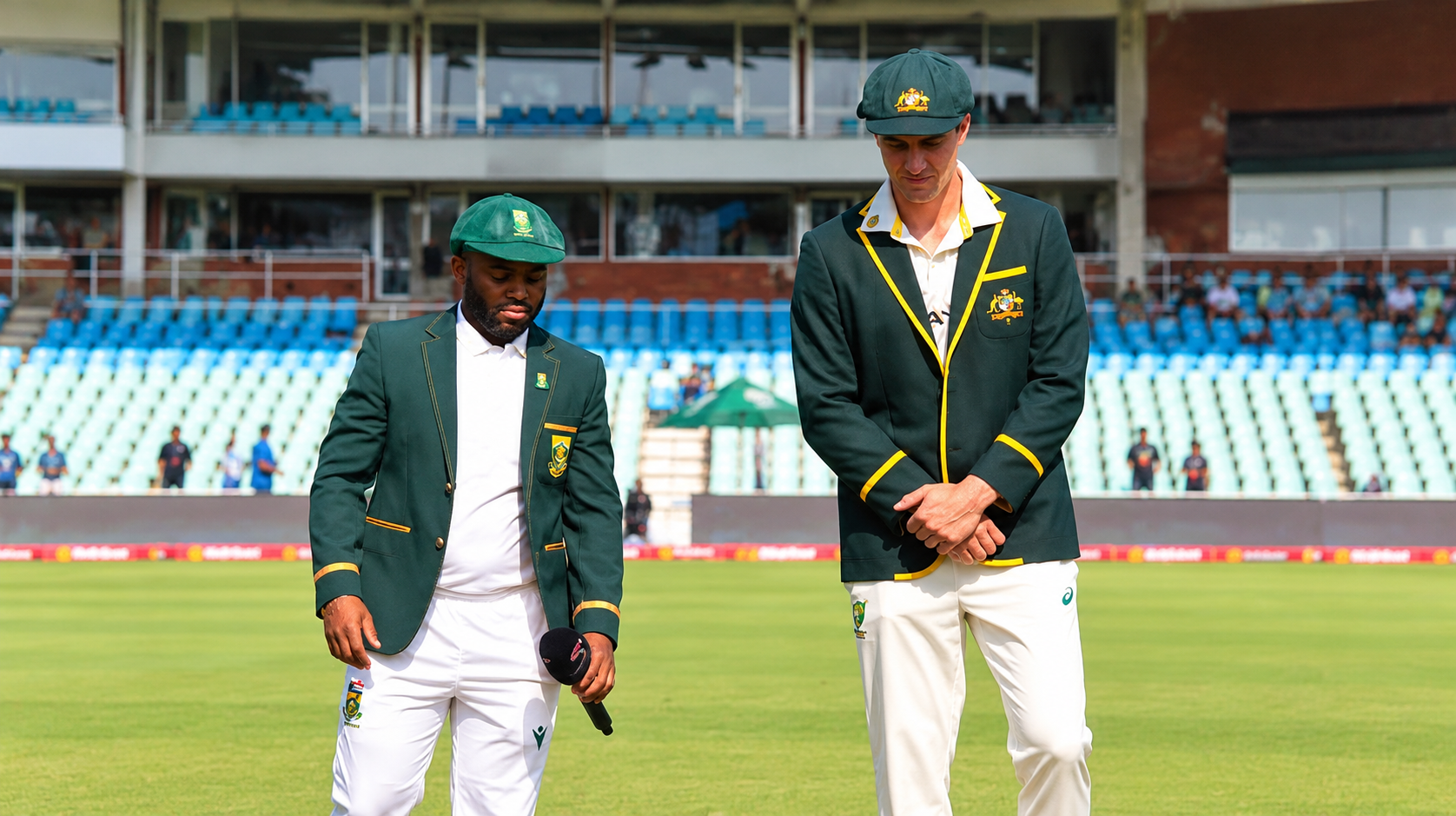
Australia captain Pat Cummins made an unusual call at Newlands after winning the toss in the third and deciding Test against South Africa. Rather than choosing to bat first, Cummins elected to field, a decision that immediately attracted attention given the venue's history and the stakes of the series decider.
The choice looked questionable during the opening session as South Africa's batters attacked Australia's bowlers with confidence. Aiden Markram and Marques Ackerman built a century opening partnership, taking the hosts to 140 without losing a wicket by lunch. Their aggressive start placed early pressure on Australia's bowling attack and gave South Africa a strong platform.
A Rare Decision at Newlands
Choosing to field first after winning the toss has been an uncommon move in Newlands Test history. The previous occasion when a captain made that call was in January 2019, when South Africa, under Faf du Plessis, sent Pakistan in to bat first.
The historical record offered a reason for caution. South Africa had lost only once at Newlands after being asked to bat first, suffering an innings-and-33-run defeat to England in 1896. They had also won twice after being inserted, against Sri Lanka in 2012 and 2017.
South Africa's record after winning the toss and choosing to field was also notable. The team had won four Tests under those circumstances, with the most recent being the 2019 match against Pakistan. The history did not guarantee an outcome, but it made Cummins' decision an intriguing talking point before a ball had been bowled.
Markram and Ackerman Punish Australia's Bowlers
South Africa's openers wasted little time in taking advantage of the decision. Markram pulled Cummins for six within the first 37 minutes, showing that he was prepared to attack even against the Australian captain.
Marques Ackerman was equally positive against the bowling. When Nathan Lyon was introduced as early as the 11th over, Ackerman advanced down the pitch and launched the spinner over midwicket for six. Lyon's early introduction was unusual for him in Test cricket, reflecting Australia's search for a breakthrough.
The opening pair's partnership was particularly significant because it was South Africa's first century opening stand in 42 Test innings. Markram and Ackerman found boundaries regularly, rotated the strike effectively and prevented Australia from settling into a consistent line and length.
South Africa Reach 140 Without Loss at Lunch
By the lunch interval, Markram was unbeaten on 56 while Ackerman had reached 82. South Africa were 140/0 after a productive first session, with the final seven overs yielding 57 runs.
Markram had also benefited from a dropped catch, when Travis Head failed to hold a straightforward chance off Mitchell Starc before the interval. The missed opportunity added to Australia's frustration as the hosts continued to score freely.
Ackerman, meanwhile, came close to challenging a long-standing South African record for the highest score by a batter in the opening session of a Test. Barry Richards had made 94 not out against Australia at Kingsmead in February 1970, a benchmark Ackerman threatened as he accelerated in Cape Town.
Why the Toss Decision Was Not Yet Settled
Despite South Africa's commanding start, it was too early to declare Cummins' decision a mistake. Test cricket can change rapidly, and the same choice to field first had brought Australia success at the Melbourne Cricket Ground in December 2013, when Lyon was introduced in the 10th over against England.
Australia went on to win that match by eight wickets, demonstrating that a decision which looks questionable in the opening session can still work out over the course of a Test. The pitch, weather, ball movement and the quality of the bowling attack all influence how a toss decision plays out.
Australia still had opportunities to respond by finding movement, breaking the opening partnership and using their pace and spin options strategically. A couple of quick wickets could have changed the complexion of the innings and brought the visitors back into the contest.
A Series Decider With Major Stakes
The third Test carries additional significance because the series is level at 1–1. Australia won the opening match in Durban by 214 runs, while South Africa responded with an innings-and-31-run victory in Gqeberha.
South Africa are also chasing the opportunity to take the world No. 1 Test ranking from Australia. A victory in Cape Town would give the hosts the series and move them to the top of the rankings, making every session especially important.
For Australia, the priority is to recover from the difficult opening session and demonstrate that the decision to field was based on a clear plan. For South Africa, the task is to convert the strong start into a substantial first-innings total rather than allow Australia back into the match.
Newlands Still Has Plenty to Reveal
The opening session gave South Africa the advantage, but the match remained far from decided. Markram and Ackerman had shown that runs were available, while Australia's bowlers needed to find a way to break through before the partnership grew beyond control.
Cummins' toss call will continue to attract scrutiny depending on how the innings develops. If Australia can dismiss the openers and restrict the total, the decision may yet prove effective. If South Africa build a large score, the choice to field first will face even greater criticism.
For now, the story of the Cape Town Test is a bold toss decision followed by a commanding South African start. The remaining sessions will determine whether Cummins' gamble pays off or whether Newlands' history has once again offered a warning worth heeding.