Beyond Vaibhav Sooryavanshi: Is India's Race to Produce Teenage Cricket Stars Going Too Far?
Vaibhav Sooryavanshi's rise has fuelled a race among Indian parents to enrol children in cricket academies at younger ages. But coaches and sports psychologists warn that early specialisation and pressure to succeed can lead to burnout, injuries and identity struggles. India's challenge is to develop young talent without taking away the joy of childhood.
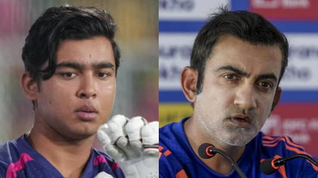
Vaibhav Sooryavanshi's extraordinary rise has inspired young cricketers across India, but it has also triggered an important debate about how the country develops its next generation of talent. As the teenager's performances attract national attention, more parents are enrolling children in cricket academies at increasingly younger ages, hoping to discover the next superstar.
The growing enthusiasm reflects cricket's enormous popularity and the opportunities created by professional leagues such as the Indian Premier League. Yet coaches and sports psychologists are raising concerns about a system in which children can face competitive expectations before they have had enough time to enjoy the game, explore other interests and develop at their own pace.
The question is not whether children should start playing cricket early. It is whether the race to produce the next prodigy risks turning a recreational activity into a high-pressure pursuit before a child is ready for it.
The Sooryavanshi Effect
Sooryavanshi's success has made the possibility of a teenage cricket career more visible than ever. His performances against established professionals have captured the imagination of young players and their families, reinforcing the belief that exceptional talent can be identified and developed from an early age.
Coaches are increasingly encountering parents who want their children to begin academy training when they are just four or five years old. Some families see cricket as a way to develop physical skills and confidence; others hope it could eventually provide a professional career and financial security.
For many parents, the intention is positive. They want to support their children's abilities and provide opportunities that might otherwise be unavailable. The problem begins when the goal shifts from helping children learn to expecting them to become the next Virat Kohli, MS Dhoni or Vaibhav Sooryavanshi.
Exceptional young players can inspire millions, but their journeys should not be treated as a universal blueprint. A rare success story does not mean every child who starts early, trains intensively and enters competitions will achieve the same outcome.
When Learning Becomes a Race to Win
Children often begin playing sport for simple reasons: they want to have fun, spend time with friends, feel part of a team or enjoy an activity they are good at. Winning and professional ambition may matter much less to them than adults assume.
However, when parents and coaches become focused on results, the experience can change. Practice sessions may become assessments, every match may feel like a selection trial, and a poor score may be interpreted as evidence that a child is falling behind.
Children are also sensitive to adult expectations. Even when parents do not openly criticise them, young players can recognise disappointment and begin worrying about letting their families down. The pressure can gradually replace the enjoyment that first attracted them to cricket.
Competition has a valuable role in sport. It can teach discipline, teamwork and resilience. But competition becomes counterproductive when children are judged mainly by their results rather than by their learning, effort and personal development.
What Sports Psychologists Warn About
Sports psychologists emphasise the importance of understanding why a child wants to play. Some children are motivated by friendship, others by the opportunity to spend time with a parent, and some develop a genuine passion for the sport. These motivations can change as children grow.
Psychologists quoted in the original report warn that pressure can emerge even in families that believe they are being supportive. When a child is disciplined, punctual or naturally talented, adults may begin to expect consistently strong performances. The child can then feel responsible for maintaining an image of success.
One long-term concern is identity. If a young player comes to believe that being a cricketer is the only thing that makes them valuable, injury, rejection or a loss of form can become difficult to handle. A sporting setback may feel like a personal failure rather than a normal part of development.
A healthy sporting environment allows children to build an identity beyond cricket. Education, friendships, family life and other interests should remain important, regardless of how talented a child may appear on the field.
Can Early Specialisation Cause Burnout?
Starting cricket young can help children become familiar with the game and develop coordination, technique and confidence. But intensive training in a single sport at an early age can also carry risks if workloads, recovery and physical development are not managed carefully.
Sports science experts have raised concerns about overuse injuries, boredom and burnout among children who specialise too early. Repeatedly performing the same movements without sufficient recovery can place excessive demands on a developing body.
Early success can also be misleading. A child who performs exceptionally well at a young age may have advantages in physical maturity or experience that become less significant as peers grow. Technical skill, decision-making, adaptability and mental resilience continue to develop throughout adolescence.
There is no universal age at which every child should begin serious cricket training. The appropriate approach depends on the child's physical development, interest, readiness and the intensity of the programme. For most children, a gradual introduction to structured competition is more sensible than treating early specialisation as a requirement for future success.
Why Starting Early Does Not Guarantee Stardom
India's enormous population and limited places in elite teams make the competition for professional cricket intense. This can encourage parents to believe that children must start earlier and train harder than everyone else simply to remain in contention.
Yet early achievement does not necessarily predict who will reach the highest level as an adult. Some youngsters who dominate age-group competitions may struggle when the physical and technical demands increase, while others develop later and eventually become stronger players.
Children also need opportunities to make decisions independently. If adults control every training session, dictate every target and constantly intervene after setbacks, young players may have fewer chances to develop their own problem-solving skills.
Long-term development requires more than repetitions and early selection. Players need time to learn, adapt to challenges, recover from mistakes and discover how they respond to pressure. Those experiences cannot be replaced by simply increasing the number of training hours.
The IPL Has Changed the Cricket Dream
The IPL has transformed the professional possibilities available to Indian cricketers. Young players can attract attention through franchise cricket, earn contracts and access coaching and support that were once available mainly to established professionals.
This expansion is a positive development for talent discovery. It has created opportunities for players from different backgrounds and demonstrated that a young cricketer can rise rapidly through the system.
But the commercial appeal of a teenage star can also intensify the search for the next one. Families may see professional cricket as a pathway to financial security, while academies and talent scouts face growing pressure to identify exceptional players early.
The danger is that children become investments rather than young people learning a sport. Time, travel and training may be viewed as costs that must produce results, even when the child's interests or circumstances change.
A strong cricket ecosystem should expand opportunities without suggesting that every promising youngster must pursue a professional career. The value of sport should not depend solely on whether it leads to an IPL contract or international selection.
Coaches Have a Responsibility to Protect Childhood
Coaches play a crucial role in balancing ambition with a child's wellbeing. They can help families understand that development takes time and that a young player's progress should not be measured exclusively by runs, wickets or tournament results.
The Cricbuzz report highlights the experience of coaches who have been asked to turn very young children into the next superstar. Their concern is that these expectations can arrive before children have developed the skills, maturity or desire needed for intensive competition.
Even extraordinary talents need carefully managed workloads and support. Early success should not be used to justify the same training schedule or expectations for every child. Coaches must consider individual needs rather than apply a single formula to all aspiring cricketers.
Parents also have an important role. Encouraging a child after a poor performance, allowing breaks when needed and listening when interests change can help maintain a healthy relationship with sport. Support should not depend on whether the child wins or loses.
What a Healthier Pathway Looks Like
India does not need to discourage children from playing cricket early. Instead, academies and families can create environments that prioritise learning and enjoyment while providing more intensive training when a child is ready.
Keep the game enjoyable: Children should have opportunities to play informally, experiment with different skills and enjoy cricket without every session becoming a performance test.
Encourage varied activities: Other sports and hobbies can help children develop different movement skills, friendships and interests. Trying another activity should not be treated as a threat to a cricketing future.
Manage training and recovery: Workloads should match the child's age and physical development, with sufficient rest and attention to injuries or persistent fatigue.
Reward progress, not just results: Coaches and parents can recognise good decisions, effort, teamwork and improvement rather than focusing exclusively on selection or scoring milestones.
Protect life outside cricket: Education, relationships and other interests help children build a broader identity and prepare them for life whether or not they become professional athletes.
Finding the Next Star Should Not Be the Only Goal
Vaibhav Sooryavanshi's achievements deserve recognition. His rise demonstrates what exceptional talent, preparation and opportunity can produce. But his story should inspire children to explore cricket, not create the expectation that every youngster must follow the same route.
India's cricketing future depends not only on producing a handful of teenage sensations but also on building an environment in which children can learn, enjoy competition and develop safely. A system that supports more young players over the long term may ultimately be more valuable than one focused on finding the next prodigy as quickly as possible.
The search for future stars will continue as cricket academies, domestic competitions and franchise leagues expand. The challenge is to ensure that ambition does not overshadow childhood and that children are given room to grow into their own players rather than being asked to become somebody else.
The most important question may therefore not be where India's next Vaibhav Sooryavanshi is hiding. It may be whether India's cricket system can nurture extraordinary talent while ensuring that every child who picks up a bat has the freedom to learn, enjoy the game and choose their own future.